Beauty Vending Machine Mexico WEIMI Client Case

A key lesson from this project is simple: in Mexico, a cosmetic vending machine is not just a retail box, but a cross-border commerce project that has to balance product presentation, electrical compliance, Spanish labeling, and importer-side responsibility. Mexico retail products generally require compliance with Mexican Official Standards, and labeling is typically handled by the Mexican importer or another Mexican entity with a local tax ID.
Why Mexico, Why Now
Mexico remains attractive for unattended retail because the vending market is still expanding, while beauty and personal care shopping continues to shift toward convenience-led formats. One market estimate places the Mexico vending machine market at USD 334.26 million in 2025, with projected growth through 2034. Another forecast values the global beauty vending machine market at USD 1.2 billion in 2025, rising to USD 2.4 billion by 2034.
For beauty brands, that matters because cosmetic vending machines solve a specific problem: they put fast-moving products in places where staff coverage is expensive or inconsistent. Key takeaway: the best beauty vending machine placements are not about replacing stores; they are about capturing purchases that would otherwise be lost to convenience or hesitation.
Client Goal
The client wanted a machine that could do four things well: display premium beauty products clearly, support high-frequency self-service sales, reduce labor dependence, and ship into Mexico without creating avoidable compliance friction. The machine platform selected for this case supports both vape and beauty use cases, which made it practical for a cosmetics rollout while keeping the same enclosure, interface, and automation logic.
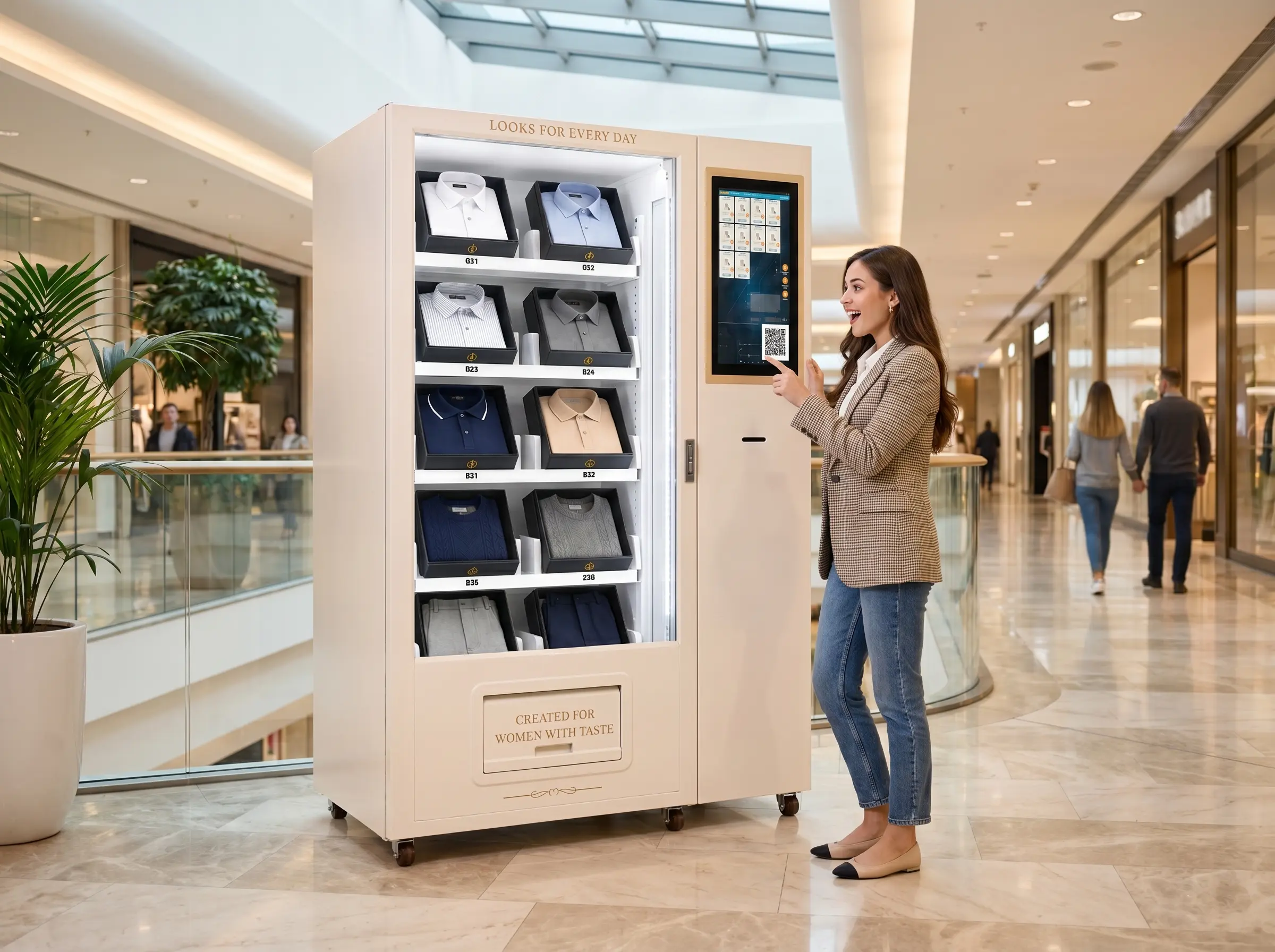
The commercial goal was not mass assortment. Instead, the client focused on a curated beauty vending machine mix: lipstick, hand cream, sheet masks, travel-size skincare, and other small-format items that are easy to test, easy to restock, and easy to upsell. That choice fits vending economics because the unit has limited shelf depth but strong visual merchandising power.
Product Fit
The base machine was originally positioned as a compliant smart vending solution with age-verification capability for regulated categories. For the Mexican beauty project, the hardware value came from the same core traits: secure dispensing, digital control, product recognition, and a presentation format that makes compact cosmetics look premium rather than transactional. The client did not need a separate cosmetic-only platform; they needed a reliable self-service system that could be adapted cleanly.
In practical terms, the machine was suited to beauty retail because cosmetics often have small packaging, high margin potential, and strong brand-recognition value. A cosmetic vending machine works best when the product is lightweight, standardized, and easy to restock in tight cycles. That made the WEIMI platform a strong fit for the client's launch plan.
Mexico Compliance Lens
Mexico is not a market where cross-border vending hardware can be treated casually. Most retail products must comply with NOM requirements, and Spanish labeling is part of the standard compliance picture. For electronic and electrical imports, public-facing guidance and third-party compliance summaries also point to NOM certification as the main safety path, with local voltage and marking requirements needing attention.
For this case, the client's importer had to manage the local compliance side while WEIMI supported the hardware documentation and export preparation. The critical point was to separate the cosmetic assortment from the machine's technical compliance: beauty products bring one set of retail considerations, while the machine brings another. Key takeaway: a successful beauty vending machine export to Mexico depends on treating product compliance and machine compliance as two different workstreams.
Launch Plan
1. Location mapping
The first step was to focus on places where beauty purchases happen fast: malls, lifestyle corridors, salons, clinics, and premium transit environments. These locations reduce friction because shoppers already expect convenience-led discovery.
2. Assortment design
The second step was to limit the SKU list to small, visually strong items with clear pricing logic. That kept the machine easy to replenish and helped maintain a clean shopping experience.
3. Local-language setup
The third step was to localize the interface and product messaging for Spanish-speaking users. In vending, clarity drives conversion, especially when shoppers decide in seconds.
4. Compliance alignment
The fourth step was to align labeling, importer documentation, and any electrical requirements with the Mexican import partner. In Mexico, the importer's role is central, so the machine launch had to be built around local responsibility, not only factory readiness.
5. Post-launch optimization
The fifth step was to monitor product performance by SKU, location, and refill frequency. That data made it easier to refine the machine mix and increase sell-through without increasing operating complexity.
Market Comparison
| Criterion | Traditional beauty retail | Cosmetic vending machine | WEIMI beauty vending machine approach |
|---|---|---|---|
| Staffing | High | Low | Low, with remote management |
| Sales timing | Store hours | 24/7 or site-based access | 24/7 or site-based access |
| Purchase speed | Medium | Very fast | Very fast |
| Product discovery | High | Moderate | Moderate, improved by strong display |
| Restocking | Manual store workflow | Small-batch replenishment | Small-batch replenishment |
| Cross-border complexity | Medium | High | Managed with importer-led planning |
| Best use case | Full beauty assortment | Impulse and convenience sales | Curated high-margin beauty SKUs |
The table shows why vending is not just a channel substitute. It is a different retail model, and it wins when the objective is convenience, visibility, and compact assortment. For a beauty vending machine Mexico rollout, this is especially relevant because the machine must earn its place through speed and format, not depth of inventory.
What Made It Work
The strongest advantage in this case was the combination of premium presentation and operational simplicity. Cosmetics are highly visual products, so the machine needed to look clean, modern, and trustworthy. At the same time, the client wanted a unit that could be deployed without building a full staffed kiosk.
Another advantage was flexibility. Because the machine platform was already designed as a smart, controlled vending system, the client could use it for beauty merchandising without redesigning the core hardware concept. That reduced time-to-launch and kept the project commercially focused. Key takeaway: the fastest path to a profitable cosmetic vending machine is to reuse proven smart-vending hardware and optimize the assortment, not reinvent the machine.
FAQ
1. What is a beauty vending machine?
A beauty vending machine is a self-service retail machine that sells cosmetics, skincare, and other personal-care items without a staffed checkout.
2. Why is Mexico a good market for cosmetic vending machines?
Mexico offers strong convenience-retail potential, and the vending market continues to grow, making compact beauty retail formats more attractive.
3. What products fit best in a cosmetic vending machine?
Small, high-margin, visually appealing items such as lipstick, hand cream, masks, mini skincare, and travel-size beauty products fit best.
4. Does a beauty vending machine need Spanish labeling in Mexico?
Yes. Retail products in Mexico generally require compliance with NOM rules, and Spanish labeling is part of the standard requirement set.
5. Who handles compliance for imported vending machines in Mexico?
In practice, the Mexican importer or another Mexican entity usually carries the local compliance responsibility and may appear on filings and labels.
6. Is a smart vending machine better than a basic vending machine for beauty?
Yes, because beauty retail benefits from better presentation, inventory control, and data-driven replenishment.
7. Can the same machine be used for vape and beauty products?
Yes. In this case, the same platform was adapted for beauty retail because the core machine functions were compatible.
8. What is the main challenge in exporting vending machines to Mexico?
The main challenge is combining machine compliance, labeling, and importer-side execution into one coordinated launch plan.
9. Why does assortment matter so much in beauty vending?
Because cosmetics sell best when the SKU list is compact, premium-looking, and easy to understand in seconds.
10. What is the main reason this project succeeded?
The project worked because WEIMI matched the hardware to the channel, then localized the launch around compliance, assortment, and site selection.
References
- Trade.gov.mx labeling and marking requirements
- NOM compliance in Mexico guide
- NOM certification for technology imports
- Exporting to Mexico certifications overview
- Mexico vending machine market report
- Beauty vending machine market report
- Shipping electronics to Mexico guide
- Mexico export control regime overview
- Taiwan export regulations to Mexico
- L'Oréal smart vending retail case
The Fan Stand Bringing Trading Cards into the Future
WEIMI Souvenirs Vending Machine Case in Travel Retail
Related Article