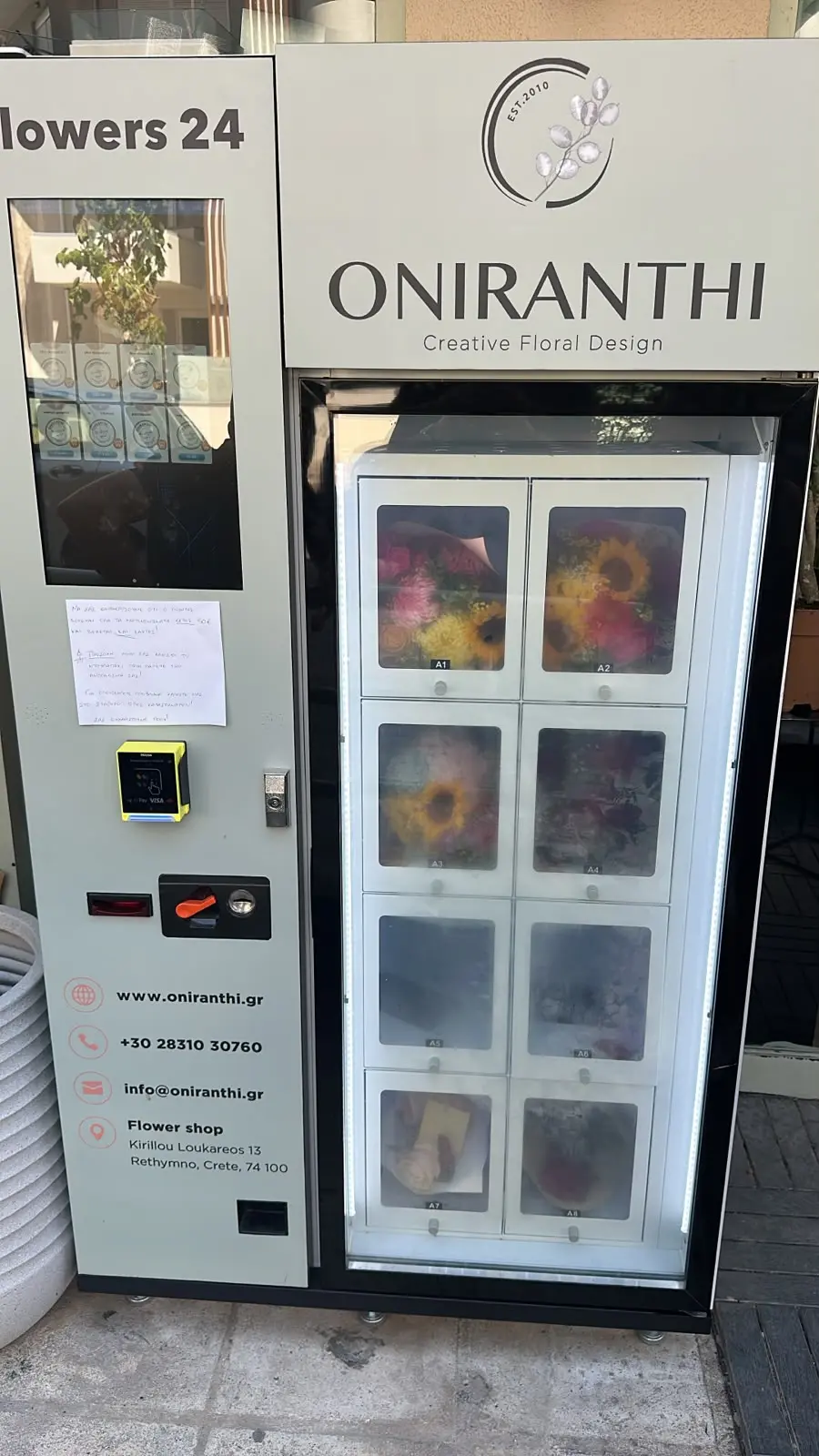
WEIMI Souvenirs Vending Machine Case in Travel Retail

A souvenir vending machine is no longer a novelty; in 2026, it is a compact travel-retail format that sells giftable, branded, or destination-linked products with cashierless convenience. For WEIMI, the strongest business case is not “automation for its own sake,” but a smarter way to capture last-minute traveler spending where footfall is high, dwell time is short, and staffing is expensive.
Why souvenirs fit vending
A travel-retail category made for speed
Souvenirs work well in vending because the purchase is often impulsive, low-friction, and emotionally driven. Travelers usually buy them near departure gates, in transit hubs, or after an event, which makes 24/7 access more valuable than a traditional staffed shop. Hong Kong International Airport's autonomous store already includes souvenirs among its grab-and-go categories, showing that last-minute travel shopping is now a recognized part of airport retail strategy.
The 2026 market signal
By 2026, airports and transport hubs are leaning harder into autonomous retail, multilingual interfaces, and cashless buying flows. One visible example is Haneda Airport Terminal 3, where a multilingual, 24-hour, souvenir-adjacent customized phone-case vending concept launched in March 2026 to help travelers turn a trip memory into a physical product in about three minutes. Another 2026 example is MSP's FIFA World Cup 2026 merchandise vending machine, which shows how event-driven souvenir vending can support limited-time demand.

Why WEIMI sees opportunity
WEIMI's view is simple: souvenir vending succeeds when the machine acts like a small retail storefront, not a generic dispenser. That means clear product presentation, multilingual guidance, payment flexibility, remote stock visibility, and enough merchandising intelligence to keep items fresh, thematic, and discoverable. Key takeaway: souvenir vending wins when it reduces decision time and increases impulse conversion.
Client context
The travel-retail problem
The client behind this WEIMI souvenir vending project needed a way to sell destination-linked gifts without relying on long staffed hours or a full shop footprint. The core challenge was familiar: travelers do not wait, souvenir demand is uneven, and premium locations are expensive to staff continuously. In that environment, a compact, always-on format can convert missed traffic into revenue.
The goal was to build a souvenir vending experience that felt local, easy, and trustworthy at first glance. The machine had to support quick browsing, fast payment, and strong visual merchandising, while also giving the operator a simple way to update products around seasonality and travel events. This is the point where WEIMI's approach matters most: the machine is treated as a retail channel, not just hardware.
The product strategy
Instead of mixing too many unrelated SKUs, the assortment was organized around destination memory, portable size, and giftability. That aligns with airport and transit retail logic already visible in autonomous store deployments, where souvenirs sit alongside essentials because travelers value convenience above all else. The strongest lesson: less choice, better story.
Solution design
1. Define the souvenir story
WEIMI started by defining the machine as a “memory retail” point, where each item connects to place, culture, or event. That framing matters because souvenir buying is emotional as much as practical. A machine that communicates a story at the product level makes faster decisions possible.
2. Build for multilingual speed
The user flow was designed for travelers who may not read the local language and do not want a long checkout process. That is consistent with 2026 travel-retail examples in Japan, where multilingual operation and quick completion are being used to make vending feel natural for international passengers. Key takeaway: language simplicity directly affects conversion in airports and tourist nodes.
3. Prioritize cashless convenience
Cashless payment is now table stakes in modern travel retail. The machine therefore needed card-based and mobile-friendly payment logic so the buyer could complete the purchase in seconds, without staff intervention or currency friction. Hong Kong Airport's autonomous store illustrates how frictionless entry and exit systems are becoming the norm for traveler-facing retail.
4. Make inventory visible remotely
A souvenir machine can lose credibility quickly if a best-selling item appears unavailable. WEIMI therefore emphasized remote inventory tracking, so operators can monitor stock levels, replenish faster, and adapt assortments by season or event. WEIMI's 2026 travel-retail article highlights the same principle: instant product updates and remote inventory management are central to smarter souvenir vending.
5. Protect the brand image
Souvenirs are often bought as gifts, so presentation quality matters more than in commodity vending. The machine layout was designed to keep products visible, tidy, and easy to retrieve, because a cluttered cabinet can make a gift look cheap even when the product itself is good. In travel retail, perceived value can rise or fall in one glance.
Industry benchmark
| Dimension | Traditional souvenir shop | Autonomous travel retail | WEIMI souvenir vending machine |
|---|---|---|---|
| Operating hours | Limited by staffing | Often 24/7 | 24/7 with no cashier shift |
| Space demand | Medium to high | Medium | Small footprint, flexible placement |
| Purchase speed | Slower, queue-dependent | Fast | Fastest for impulse purchases |
| Language support | Staff dependent | Often multilingual | Multilingual UI suitable for travelers |
| Inventory control | Manual or semi-manual | Digital | Remote tracking and quick updates |
| Best use case | Broad catalog, high staff support | Mixed travel essentials | Giftable, themed, event-linked souvenirs |
The clear pattern is that souvenir vending is strongest where speed, visibility, and uptime matter more than browsing depth. That is why WEIMI's model is best suited to airports, visitor centers, museums, attractions, and event venues rather than large, complex gift assortments.
Deployment results
Faster buying behavior
The machine performed best in traffic zones where travelers had only a few spare minutes. In that setting, the concise product selection and direct shopping flow reduced hesitation and made gift buying feel almost effortless. The same behavior is visible in 2026 airport vending concepts that focus on urgency and convenience rather than browsing.
Better product discoverability
Because the machine grouped products by story and theme, shoppers understood the offer quickly. That matters in souvenir retail, where the real competition is not just another machine, but the traveler's decision to skip shopping entirely. Clear visual merchandising helped turn idle curiosity into completed purchases.
Easier operations
Remote monitoring simplified replenishment planning and reduced the risk of stockouts during peak periods. For operators, that means fewer surprises and a more predictable retail rhythm. Key takeaway: in souvenir vending, operational simplicity is part of the customer experience because an out-of-stock machine breaks trust immediately.
Stronger location fit
The machine fit naturally into locations with high dwell time and high emotion, such as departure zones, tourist corridors, and event venues. This is consistent with the broader shift in 2026 toward travel-retail formats that combine speed with experience, rather than forcing travelers into a traditional shopping journey.
What mattered most
Product curation
The strongest selling point was not the machine itself, but the product mix inside it. Souvenirs need to feel authentic, portable, and gift-ready. A small, sharply curated assortment beats a crowded cabinet every time.
Placement strategy
Location determined performance more than any single feature. Machines placed where travelers are waiting, ending a trip, or looking for a last-minute gift are naturally better positioned than machines placed in low-intent corridors. That pattern is already visible in current airport autonomous retail deployments.
UX design
The interface had to be obvious, fast, and low-stress. Travelers should understand the offer in seconds, not minutes. In souvenir vending, every extra step can lower conversion because the purchase is usually optional, not necessary.
Brand trust
Gift buying is emotional, so product quality and machine cleanliness affect trust disproportionately. A polished, well-lit presentation supports perceived value and makes the machine feel like a legitimate retail extension rather than a novelty. That is the difference between one-time curiosity and repeat use.
Why this model works
Souvenir vending works because it solves a very specific travel-retail problem: people want a meaningful gift, but they do not want a slow shopping trip. WEIMI's 2026 approach is to compress the retail journey into a few clear actions while preserving the feeling of discovery. That is why the format performs best when the product story is strong and the operating model is disciplined.
For operators, the commercial logic is straightforward. A machine can run continuously, occupy limited space, and turn passive foot traffic into direct sales without staffing a gift shop. For travelers, it feels modern and convenient. For brands, it creates a controlled retail surface in places where traditional stores are hard to justify.
The broader industry direction supports this model. Airports are already expanding autonomous and grab-and-go retail, and 2026 deployments show that vending is moving beyond snacks into merchandise, customization, and event-based souvenir sales. WEIMI's opportunity is to keep translating that trend into machines that are easier to operate, easier to merchandise, and easier to scale.
FAQ
- What is a souvenirs vending machine? It is a vending format designed to sell giftable, travel-linked, or destination-themed products through a fast self-service flow.
- Why does it work well in airports? Airports concentrate short dwell times, high last-minute buying intent, and 24/7 traffic, which fits vending better than staffed retail.
- What products sell best? Portable, visually appealing, and emotionally meaningful items usually perform best, especially those linked to a place, event, or local identity.
- Is multilingual support necessary? Yes, because international travelers often decide quickly and abandon purchases if the interface feels confusing.
- Why is cashless payment important? Cashless payment reduces friction and supports fast completion, which is essential for impulse purchases in travel retail.
- How does remote inventory help? It helps operators prevent stockouts, replenish on time, and update the product mix for seasonal or event-driven demand.
- Can souvenir vending be customized by location? Yes, and that is often the best strategy because tourist behavior changes by venue, season, and local theme.
- Is this format only for airports? No, it also fits museums, attractions, event halls, stations, and visitor centers where quick gift purchases happen naturally.
- What is the biggest risk? A weak product story or poor placement can make the machine look like a novelty instead of a credible retail channel.[
- Why does WEIMI recommend this model now? Because 2026 travel retail is clearly moving toward autonomous, cashless, and experience-led formats that reduce staffing pressure while protecting conversion.
Beauty Vending Machine Mexico WEIMI Client Case
Swojski Sklepik Scaled Poland's First 24/7 Automated Grocery Network with WEIMI Technology
Related Article