A Combo Machine that Rents Gear and Sells Fuel
Why sport vending is evolving right now
Sports venues have changed. Courts, gyms, and parks are busier, but staffing is tighter and users expect 24/7, cashless convenience. Vending has stepped into the gap—not just for cold drinks, but for higher-value services like short-term equipment rental and premium performance nutrition. In North America and beyond, this shift is supported by two durable tailwinds:
- More active consumers and higher club participation. U.S. fitness facility membership hit an all-time high in 2023 (72.9 million) and rose again in 2024 to ~77 million—about one in four Americans—according to the Health & Fitness Association. That's a larger, steadier audience around gyms and courts at all hours. (Health & Fitness Association)
- Steady growth in smart, cashless vending. The U.S. retail vending market was valued at about $15.0B in 2024 and is forecast to keep expanding through 2033, with cashless systems taking the largest share as consumers prefer tap-and-go. (Grand View Research)
Against this backdrop, a combo rent+sell machine—one unit that rents paddle rackets, baseball bats, yoga mats, etc., and retails energy bars, protein drinks, and hydration—meets current demand better than any single-purpose machine.
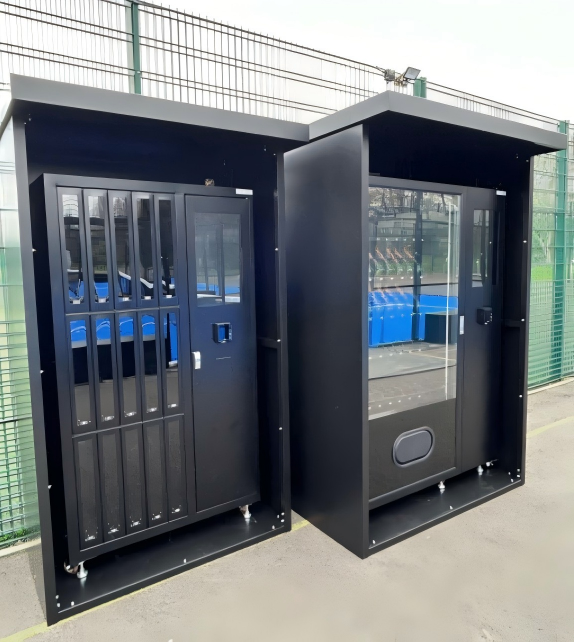
Introducing the combo rent+sell sports vending machine
Think of it as a compact, always-on pro shop and equipment room:
- Self-service rentals (secure lockers): Users select, pay, and a locker door pops open with the reserved item. Timers track usage; overdue items trigger reminders or late fees. Durable racks and shaped cradles keep bats and paddles in perfect condition.
- Smart retail (snacks & drinks): A refrigerated vending machine for cold beverages, energy bars, gels, and recovery snacks. Dynamic facings let you test bestsellers by venue and time of day.
- Unified payments & access: Card, NFC wallets, and QR—plus one receipt whether the customer rents, buys, or both.
- 21.5–55″ media screen: Promote local leagues, upsell rental bundles (“Racket + Isotonic + Protein Bar”), and run sponsor ads to offset site costs.
- Cloud management: Real-time inventory, remote pricing, locker status, and a service console for onsite staff.
Problems it solves for gyms and courts
- Peak-time bottlenecks vanish. Rental counters and café lines are finite; a self-service unit adds “elastic” capacity exactly when matches or classes change over.
- Lost gear becomes trackable revenue. Check-out/check-in via QR or member ID, photo evidence at door close, and deposit logic reduce shrink while keeping friction low.
- Late-night service without staff. Courts and fitness rooms often run after reception closes. A 24/7 machine extends service hours, which is vital as more members train outside 9-to-5. (Health & Fitness Association)
- Healthier assortments, higher basket. Today's users want function: electrolytes, low-sugar protein, caffeine-free hydration, and quick carbs pre-match. You can test and rotate SKUs weekly with remote planogram changes. (Grand View Research)
- Space efficiency. One footprint handles both high-value rentals and high-velocity CPG, outperforming a traditional single-category machine.
Features that reflect today's sport vending trends
Smart, contactless, and accountable
- Cashless-first UX: Tap-to-pay and QR flows complete within seconds; receipts are emailed or pushed to member apps. (Cash acceptance is optional for parks and schools.) (Grand View Research)
- Computer vision & weight sensing (configurable): Optional shelf sensors confirm product pickup; locker door sensors timestamp open/close events and detect empties on return.
Built for the venue operator
- Dynamic pricing & promos: Raise rental rates during tournament blocks, offer “rainy-day” discounts, or bundle “Racket + Balls + Drink” with a single tap.
- Inventory intelligence: Auto-reorder thresholds for bars and bottles; rental rotation ensures gear wears evenly.
- Ad monetization: Sell screen time to brands or local sponsors; program it to trigger when machines detect queues or after a match finishes.
What to stock—and when
A winning assortment is situational:
-
Court sports (paddle/tennis/pickleball): Rackets/paddles, balls, wrist straps, over-grips, elbow braces; chilled water, isotonic drinks, simple-carb chews for between sets.
-
Diamond & field (baseball, softball, soccer): Bats (youth/adult), helmets, shin guards, cones; protein shakes and recovery chocolate milk alternatives for post-game.
-
General fitness zones: Yoga mats, resistance bands, jump ropes; caffeine-controlled pre-workouts, low-sugar protein bars, and RTD coffees.
Placement & UX best practices
- Intercept the traffic. Put the machine on the path between the entrance and courts, or near league sign-in tables. The shorter the detour, the higher the conversion.
- Instant support. A “Need help?” QR shows on the user interface; site staff view it in the same cloud console they use for inventory.
- Lighting and cleanliness. Bright, clean surrounds correlate strongly with impulse buys for snacks and functional beverages; schedule nightly sanitization cycles and publish them on-screen to build trust.
How venues make money with combo machines
- Multiple revenue streams: Rental fees + product margins + screen ads + potential sponsor co-funding.
- Utilization flywheel: As more people learn they can rent on demand (no need to carry gear), circulation rises; circulation drives visibility; visibility lifts retail attachment (drink+bar).
- Data-driven pricing: Weekend tournaments, school holidays, and hot weather all justify responsive pricing and assortments.
Why now: the market signal is clear
The sport vending opportunity aligns with two independently measured trends:
- There are simply more active customers around your machines. The HFA reports record U.S. fitness participation—first 72.9M in 2023, then ~77M in 2024—meaning more footfall and more off-hour usage when staffed counters are closed. (Health & Fitness Association)
- Smart vending keeps expanding, with cashless leading. U.S. vending revenue is growing and shifting to cashless and smart features—exactly the capabilities that make rentals and premium assortments seamless. (Grand View Research)
Implementation checklist for your site
- Decide rental catalog & rules: Price per time unit, deposit amounts, late fees, and replacement costs.
- Map the customer journey: Signage at booking desks and court doors; QR codes that deep-link to the “Match Kit” bundle.
- Secure anchoring & safe materials: Anti-tip base, rounded corners, shatter-resistant doors, and moisture-rated internals for poolside or outdoor courts.
- Connectivity plan: Redundant LTE/5G router with external antenna; store-and-forward logic for transactions during brief outages.
- Service intervals: Weekly grip checks, ball rotation, and locker sanitation cycles; remote alerts for temperature, jams, or door faults.
- Data governance: Honor local privacy rules; store only what you need for deposits and returns; publish a clear rental policy on-screen.
Conclusion: a better pro-shop, on demand
A combo rent+sell sports vending machine turns wasted wait time into revenue, puts pro-shop convenience within reach at any hour, and uses smart data to keep the right items in stock. With more people training and playing—and with vending shifting decisively toward smart, cashless, unattended retail—the timing is ideal to place these machines at courts, gyms, and community sports hubs. (Health & Fitness Association, Grand View Research)

Smart Locker Vending Rentals in Apartments
How to Transform a Normal Fridge into an AI Vending Fridge
Related Article