Gym Towel Management: Plan Pickup, Returns and Restocking
Plan the towel service before choosing the machine
Quick answer: gym towel management needs a complete loop: issue a clean towel, collect the used towel, send it for laundering and return clean stock to service. A towel locker can support access and collection, but the venue still needs a restocking schedule, a laundry process and a clear way to handle exceptions.

A useful starting question is not how many lockers to buy. It is what should happen when a member needs a towel, returns it, or cannot complete the process. This guide gives gym managers a practical planning worksheet for those decisions. It covers an operating process, not a customer case study or a promise of labour savings.
Choose a towel service model first
Write down whether members are buying a towel, borrowing one as part of membership or paying for a temporary rental. These are different operating models. They need different instructions, stock records and return policies. Avoid choosing payment hardware before deciding which model the venue will actually offer.
| Model | Member expectation | Planning decision | Record to keep |
|---|---|---|---|
| Towel sale | The member owns the towel after purchase. | Product price, packaging, payment and refund process. | Sales, failed collections and remaining stock. |
| Membership inclusion | Towel access is an included benefit under the club's policy. | Eligibility, allowance, access method and return instructions. | Issues, returns and exceptions, where supported. |
| Paid rental | The towel must be returned under a stated policy. | Rental fee, any deposit, return deadline and dispute process. | Rental status and payment adjustments, if supported. |
A card reader does not by itself establish membership entitlement, deposit handling or return verification. Ask the supplier to demonstrate each required function with the proposed hardware and software. Record any manual steps before accepting the system.
Separate clean pickup from used-towel return
Draw the route a member follows from the gym entrance to clean-towel pickup and then to the return point. Separately, draw the staff route for replenishment and collection. Use this plan to avoid a layout where a staff member must place used towels on the clean loading surface to reach the return area.
Clean-towel pickup
Specify the approved folded towel, the quantity available per collection and the member instructions. Test a real towel in the proposed compartment. Include the packaging, if any, because the usable fit matters more than a towel's unfolded dimensions. Check that users can identify the assigned compartment and reach it in the intended location.
Used-towel collection
Make the return destination unmistakable. Depending on the ordered configuration, this could be designated compartments or a separate collection arrangement. Decide who empties it, how staff know when service is needed and what members should do if it is unavailable. Do not assume that opening or closing a door proves that a towel was returned.
Laundry handoff
Assign responsibility for collection, transport, laundering, inspection and restocking. Follow the venue's hygiene procedures and the towel manufacturer's care instructions. Treat the locker as storage and access equipment; do not describe it as washing or sanitizing towels unless a separate, documented system provides that function.
Plan stock around the time between refills
Measure towel demand during the hours between staff visits. Daily attendance alone is an incomplete planning input: a busy evening class can use up accessible clean stock long before the daily laundry delivery. Track actual towel collections by time interval before deciding how much stock to make available.
Planning formula: clean towels required between refills = expected collections in that interval + an explicitly chosen buffer.
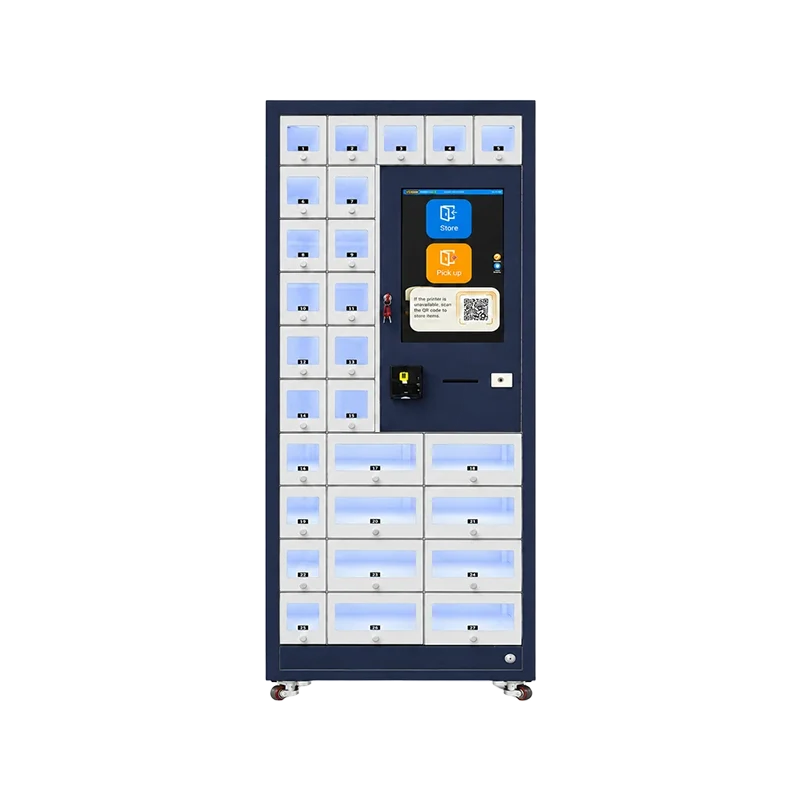
Illustrative example, not a venue result: suppose a gym expects 18 towel collections before the next refill and chooses a buffer of 6. It would plan for 24 accessible clean towels for that interval. This does not mean every 24-locker cabinet holds 24 towels: usable stock depends on the tested towel fit, the issue rule and the compartments reserved for other purposes.
If some lockers are allocated to returns, they are not simultaneously available for clean-towel distribution. If a compartment holds a stack but one opening permits access to the entire stack, the physical count is not the same as a controlled one-towel issue capacity. Validate this distinction during the demonstration.
Keep three quantities separate
- Accessible clean stock: towels ready for members now.
- Clean reserve: inspected towels available for the next refill.
- Laundry pipeline: towels in collection, washing, drying or inspection.
For each refill, write down the opening clean count, towels added and closing clean count. Reconcile any reported issues against physical stock using the same time interval. Investigate unexplained differences before assigning them to loss: staff movements, failed collections and counting mistakes can also affect reconciliation.
Create a daily service checklist staff can follow
Give every task an owner and a completion record. A self-service access point still requires someone to respond when the return area fills, clean stock runs low or a member cannot open the assigned compartment. The schedule should cover periods when the front desk is unattended.
| Stage | Suggested staff action | Evidence of completion |
|---|---|---|
| Before opening or the main busy period | Inspect the cabinet, check clean stock and confirm the return point is available. | Time, staff initials, stock count and any blocked compartments. |
| During service | Check stock and returns at intervals chosen from observed demand. | Refill and collection counts, with the service time. |
| Laundry transfer | Move returned towels through the venue's established handling process. | Quantity sent, quantity received and items held for inspection. |
| End of shift | Reconcile stock, unresolved member issues and maintenance needs. | Handoff note with a named next owner. |
Write cleaning instructions with the equipment supplier. Confirm suitable products, surfaces and any electrical precautions instead of improvising a spray routine around screens, readers or locks. Keep the member-facing instructions short; keep the detailed staff procedure in the operating manual.
Decide what happens when the normal flow fails
Test the exceptions before launch, not only a successful collection. The following are acceptance-test questions, not claims that every towel vending system includes these capabilities.
- Access is authorized but the door does not open: who provides help, checks the event and decides whether to reissue access or refund a payment?
- A compartment is empty: how does the member report it, and how is that compartment removed from service?
- The return point is full: where should the member leave the towel, and who records the exception?
- Power or connectivity is interrupted: what remains available, what stops and how does staff restore normal operation?
- A return is disputed: what evidence is actually recorded, and what fair review process does the venue apply?
- The membership system is unavailable: is there an approved staff-assisted fallback, and how is its use reconciled?
Keep personal information collection proportionate to the operating need. If the workflow links member identity, payments and access events, confirm the data fields, staff permissions and retention arrangements with the relevant providers. Do not promise an integration until it has been demonstrated for your selected systems.
Run a pilot with measurable acceptance criteria
Choose a pilot period that includes both quieter hours and the venue's normal busy periods. Set success criteria before starting. Avoid comparing staff time or towel loss against an undocumented impression of how the old service worked.
- Record a baseline for towel issues, stockouts, staff visits, unresolved requests and physical stock differences.
- Test real towels, the proposed member flow and the planned return arrangement.
- Observe refill and collection tasks, including access to the cabinet for servicing.
- Run the exception tests and record which require manual intervention.
- Review the results with staff and decide whether to change the service interval, locker allocation or member instructions.
Track measures using consistent definitions. For example, count a stockout as a period when no clean towel is available through the normal member process. Record its duration, not only the fact that it occurred. For a return metric, define the expected return window before calculating a rate. Avoid treating an unresolved return as a confirmed loss.
What to send WEIMI for a configuration review
Prepare your folded towel dimensions, photographs of the proposed site, expected collections between refills, intended clean/return allocation, member-access method, destination country and daily service plan. Explain any requirements for payment, membership integration or return detection separately.
The WEIMI gym towel vending machine product page presents a customizable 30-locker configuration and explains that access and return workflows depend on the selected hardware and software. Use that page for the product details, then request written confirmation of the configuration that fits your operating plan.
Gym towel management FAQ
Does a towel vending machine wash the towels?
The locker configuration discussed here provides storage and access. The venue remains responsible for laundering, inspection and hygiene procedures; washing or sanitizing must not be assumed.
Can members use the system without buying a towel?
A venue can plan membership-included access or a rental service, but the chosen authorization, payment and software workflow must be confirmed with the supplier. A card reader alone does not establish membership integration.
How many towels should be ready between refills?
Start with expected collections during that interval and add a chosen buffer. Then verify the usable capacity with the actual folded towel and the planned allocation of clean-stock and return compartments.
Does a locker prevent all towel losses?
Do not assume that it does. Define access rules, return handling and stock reconciliation. Confirm what the system records and whether any return-verification function is included in the ordered configuration.
What should a gym test before accepting the system?
Test towel fit, member access, pickup, returns, refilling and staff servicing. Include empty compartments, failed door openings, full returns and power or network interruptions in the acceptance plan.
Product reference and planning assumptions
WEIMI: Gym Towel Vending Machine for Towel Storage and Management with Anti-theft Features, reviewed on October 23, 2026. This is a supplier source for the displayed configuration and its stated workflow limitations, not an independent study of operational results.
The operating checklists are planning recommendations. The 18 + 6 = 24 calculation is an illustrative scenario, not measured customer data. Confirm the selected equipment, site requirements and local obligations before deployment.
Self-Service Sports Equipment: 24/7 Smart Vending Solution
Outdoor Vending Machine Installation A Practical Site Checklist
Related Article