How Profitable Is a Self-Service Dog Wash Business in 2026
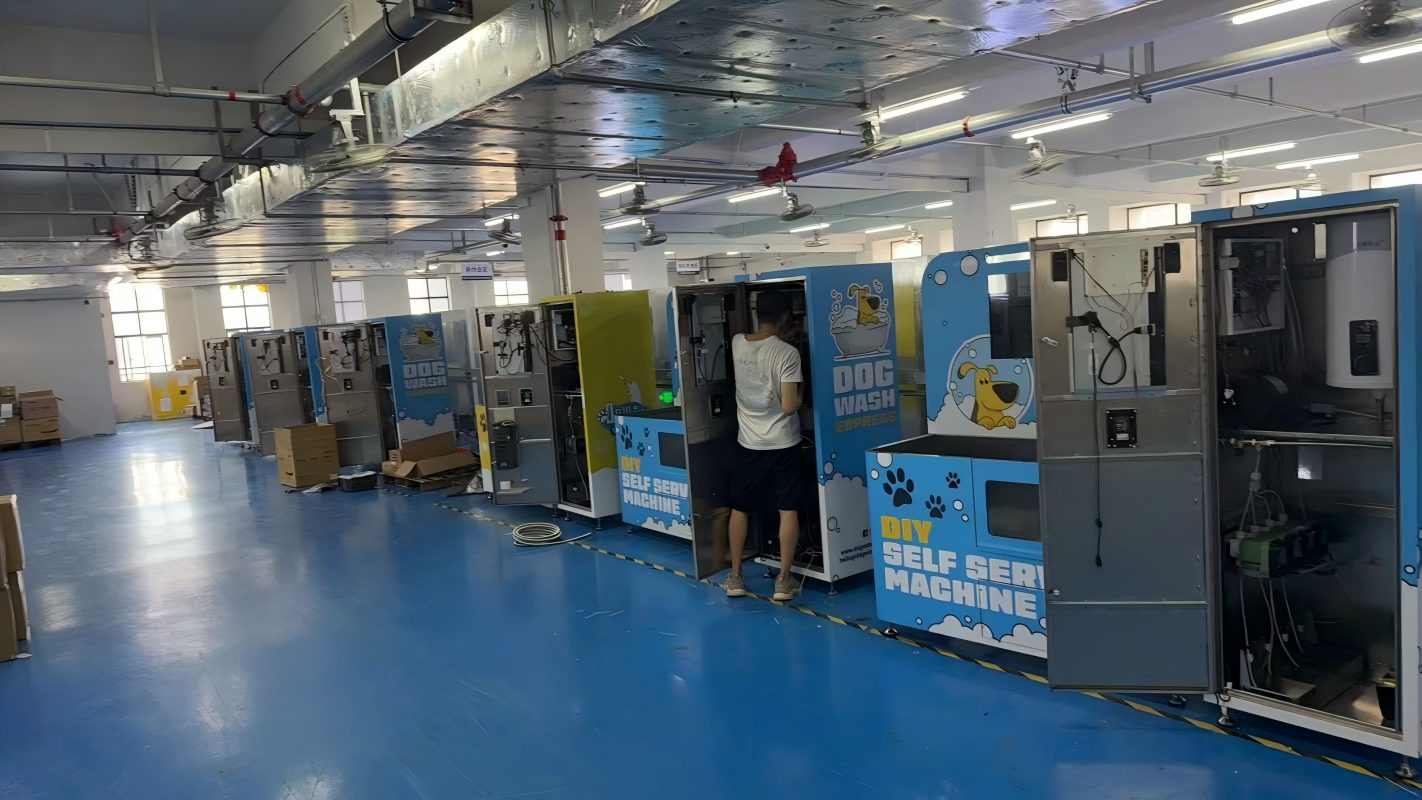
For entrepreneurs looking for a recurring revenue stream with low labor requirements, the self-service dog wash model is increasingly attractive. The pet industry continues to prove recession-resistant, and owners are willing to pay for convenience that saves them from cleaning up a messy bathroom at home.
However, moving from a concept to a profitable business requires moving past enthusiasm and looking at the core numbers. This post will break down the revenue potential, daily operating scenarios, and expected return on investment for a commercial dog wash machine in 2026.
The Business Model
The concept is straightforward: you provide a durable, professional-grade wash station, and the customer does the work.
A modern commercial dog wash machine is an all-in-one system. It provides temperature-controlled warm water, a non-slip tub, specialized shampoos, conditioners, flea treatments, and a high-velocity, pet-safe dryer. Customers appreciate the professional results, and you appreciate the lack of payroll expenses. Your primary roles are location management, routine cleaning, and refilling the soap tanks.
Average Price per Wash (2026 Projections)
The days of the $5 wash are largely gone. Pricing in 2026 is driven by inflation, rising utility costs, and the premium that customers place on convenience.
The average national price for a standard 15-to-20-minute wash cycle is projected to be $18.
Many operators use tiered pricing models based on time or dog size (e.g., $15 for small dogs, $22 for large dogs), but $18 serves as a solid baseline for revenue modeling.
Crucially, your profit per wash remains high. While a manufacturer may claim a cost of only $1 per wash for consumables, a more realistic 2026 budget—accounting for the water, electricity (specifically for water heating and high-speed drying), specialized shampoos, and sanitizing solutions—places the variable cost closer to $3.50 per wash.
This leaves you with a healthy $14.50 gross profit per customer interaction.
Daily Usage Scenarios (Traffic Breakdown)
The profitability of your machine is entirely dependent on volume, which is dictated by your location. The best locations are high-pet-traffic areas: adjacent to popular dog parks, near busy veterinary clinics, or attached to existing car washes or laundromats.
We examine three realistic scenarios for a single machine:
1. Low Traffic Scenario
- Washes per day: 3
- This is typical for a new machine in a developing location or a machine placed inside a business where dog washing is strictly a secondary service (e.g., a hardware store).
2. Medium Traffic Scenario (Industry Standard)
- Washes per day: 6–7
- This is the realistic average for a well-located, standalone machine near a residential area with high dog ownership or attached to a busy car wash. Manufacturers often use a target of 35–40 washes per week as a standard baseline.
3. High Traffic Scenario
- Washes per day: 12+
- This traffic is achieved only in premier locations, such as directly at the entrance of a premier regional dog park or in a dense urban neighborhood where home washing is impossible. During peak times (sunny weekend afternoons after rain), this machine might be running non-stop.
Monthly Gross Profit Estimates
To determine your potential monthly earnings, we look at Gross Profit—your total revenue minus the direct variable costs of water, energy, and soap. We use a 30-day month and the standard average wash price of $18 (generating $14.50 gross profit).
| Scenario | Washes/Day | Monthly Revenue | Variable Costs (Soap/Water/Elec) | Estimated Monthly Gross Profit |
| Low Traffic | 3 | $1,620 | $315 | $1,305 |
| Medium Traffic | 6 | $3,240 | $630 | $2,610 |
| High Traffic | 12 | $6,480 | $1,260 | $5,220 |
These figures do not include fixed overhead costs such as rent for your 2–3 square meters of space, business insurance, or marketing.
Startup Costs and ROI Timeline
Your Return on Investment (ROI) timeline is determined by balancing your gross profit against your initial investment.
Startup Investment
In 2026, the price of a robust, high-end commercial dog wash machine (including shipping, payment acceptors, and graphics) will average $22,000. Imported from a China factory, it will be much cheaper.
Installation is a variable but significant cost. You must account for a contractor to handle the plumbing (hot/cold water lines, high-capacity drain) and electrical work (often requiring dedicated high-amperage circuits for water heaters and dryers). Depending on the existing site infrastructure, installation can range from $3,000 to $8,000.
Let's assume a realistic total startup investment of $27,000 per machine (installed).
ROI Timeline Estimates
The "Return on Investment" timeline below is the point at which your cumulative gross profit equals your initial $27,000 investment.
- Low Traffic Scenario ($1,305/mo): Approx. 21 months.
- Medium Traffic Scenario ($2,610/mo): Approx. 10.5 months.
- High Traffic Scenario ($5,220/mo): Approx. 5 months.
The medium traffic scenario is the most reliable baseline for a new investor. With a well-chosen location, a commercial dog wash machine can fully pay for itself in less than one year.
Summary
A self-service dog wash remains a highly viable business in 2026. It is not "passive income"—the machine needs to be wiped down daily, and hair must be cleared from the drains to maintain the reputation required for high volume—but it is a streamlined, low-labor operation.
The core of profitability lies in the location. If you have access to a site with strong pet traffic, the mathematical path to a sub-one-year ROI is very strong.


How Self-Service Dog Wash Machines Work (Inside the System)
How to Start a Self-Service Dog Wash Business
Related Article