What Is a Ramen Vending Machine? Complete Overview
Quick definition
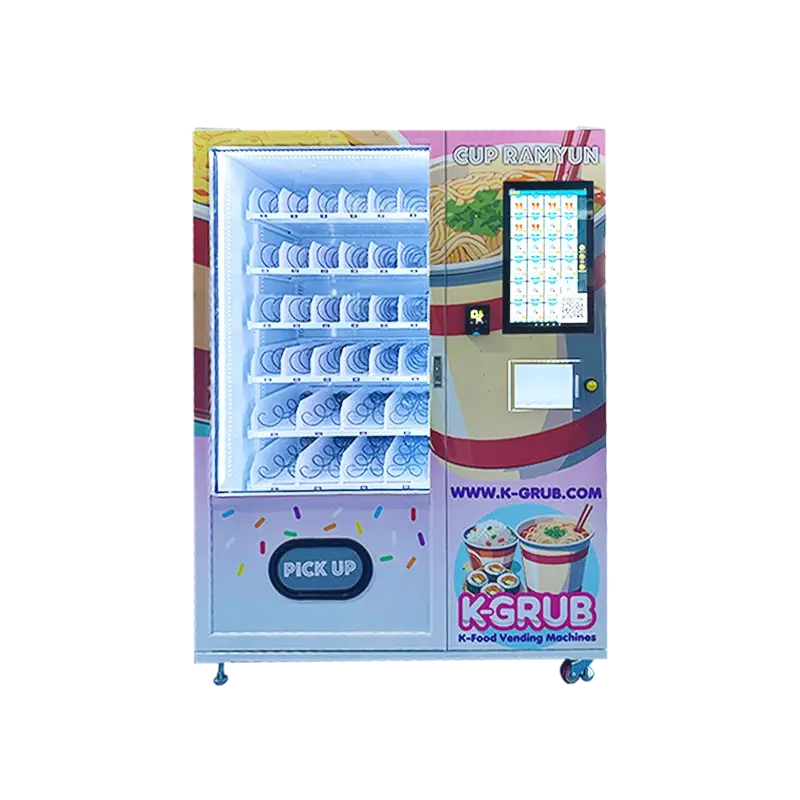
A ramen vending machine is an automated retail unit that dispenses fully prepared or instant ramen (cup or bowl) and includes integrated heating/water systems so customers receive a hot serving on demand.
How a ramen vending machine works (brief steps)
-
Dispensing mechanism
Most commercial units use adjustable trays or modular slots (up to ~60 trays, ~300 items) with coil or push‑tray mechanisms that position the selected product for delivery and prevent mis-vends.
-
Hot-water / heating subsystem
Hot-water systems vary: instant-boil modules, stored-boiler reservoirs, or microwave/heater hybrids; machines typically dispense measured hot water only after purchase and allow configurable temperature and dispensing time.
-
Payment & telemetry
Modern ramen vending machines accept cashless payments (card, Apple/Google Pay, e-wallets) and connect to cloud telemetry for remote inventory, sales monitoring, and software updates.
Key features at a glance
Parameter table (example B2B spec comparison)
| Parameter | Typical Basic Model | Mid-tier Smart Model | Premium Fleet Model |
|---|---|---|---|
| Capacity (items) | 60–120 | 150–300 | 200–300 per cabinet |
| Servings/day (practical) | 50–300 | 200–1,000 | 500–2,500 |
| Power (approx.) | 1–2 kW | 2–4 kW | 3–6 kW |
| Footprint (m²) | 0.6–1.2 | 1.2–1.8 | 1.5–2.5 |
| Payment methods | Card, mobile | Card, mobile, e-wallet, loyalty | Card, mobile, cash + advanced payment APIs |
| Hot water system | Basic instant dispenser | Configurable temp/volume | Redundant boiler, safety interlocks |
| Average price range (USD) | 2,000–6,000 | 6,000–18,000 | 15,000–40,000+ |
| Lead time | 2–6 weeks | 4–12 weeks | 6–16 weeks |
| Warranty / support | 6–12 months | 1 year + optional SLA | 1–3 years + fleet support |
Typical use cases
- Transport hubs (airports, train stations) where dwell time and footfall support 24/7 sales.
- Campuses, hospitals, and factories with shift-workers needing fast hot meals.
- Hotels, malls, and event venues for late-night or supplementary F&B service.
- Street-food / micro‑retail concepts where operators mix vending modules with on-site kitchens.
Price range and purchase types (summary)
Commercial ramen vending machines sell across three tiers: entry-level units for low-volume sites (approximately USD 2k–6k), mid-tier smart machines with cloud management and larger capacity (USD 6k–18k), and enterprise fleet-ready units with customization and SLA (USD 15k+). Prices depend on capacity, hot-water system, payment hardware, and software licensing; custom branding and regulatory certifications add cost and lead time.
Professional perspective and procurement advice
As a B2B operator, prioritize uptime and telemetry first: machines that report inventory and temperature in real time materially reduce stockouts and food-safety risk, which directly affects revenue per location. Choose models with modular access (adjustable slots) and a proven hot-water subsystem that limits water exposure to paid transactions only; this lowers waste and simplifies compliance. Finally, buy with a 12–24 month SLA in mind for fleet deployments to secure spare parts and scheduled maintenance.
FAQs
-
How much does a ramen vending machine cost?
Typical commercial ranges: USD 2,000–6,000 (entry), USD 6,000–18,000 (mid-tier), USD 15,000+ (enterprise). Confirm vendor quotes for customization and shipping. -
Can a vending machine make fresh ramen or only cup noodles?
Most current widely deployed units serve cup/instant noodles; some advanced machines support fresh-prepared meals but require more complex heating and food-safety systems. Verify model capabilities before purchase. -
How long does a serving take?
A typical dispense + hot-water cycle ranges 60–180 seconds depending on heating method and portion size. -
What payment methods are supported?
Modern units support card, contactless, mobile wallets (Apple/Google Pay), and e-wallet integrations; cash acceptance is optional and increases servicing complexity. -
Do machines need a direct water line?
Some units use onboard reservoirs refilled during servicing; high-throughput sites often require a plumbed water line for continuous operation and safety. -
What maintenance is required?
Daily restocking and visual checks; weekly cleaning of water and heating subsystems; monthly calibration and filter changes per vendor instructions. Maintain logs for compliance. -
Are there food-safety regulations to consider?
Yes—local food-safety rules apply. Implement HACCP-aligned cleaning schedules and temperature logs for heated foods. -
How many servings per day can one machine do?
Depends on capacity and location; practical throughput ranges from dozens in low-traffic sites to thousands across premium high-traffic locations when using multiple cabinets. -
Can the machine be branded and customized?
Yes. Most suppliers offer exterior branding, UI localization, and product layout customization—expect extra lead time and cost. -
What warranty and support are typical?
Warranty varies from 6 months to 3 years; fleet deployments should secure SLAs covering spare parts, remote diagnostics, and on-site repair times.
References
- Smart Vending Machine — Cup noodle ramen vending machine with free hot water supply. //www.smart-vendingmachine.com/cup-noodle-ramen-vending-machine-with-free-hot-water-supply.html
- Smart Vending Machine — Ramen vending machine for 24/7 hot noodle sales. //www.smart-vendingmachine.com/ramen-vending-machine-for-24/7-hot-noodle-sales.html
- Smart Vending Machine product page (instant ramen vending with hot water). //www.smart-vendingmachine.com/instant-ramen-vending-machine-with-hot-water-dispenser-for-sale.html
Ramen Vending Machine for Sale — Price, Specs & ROI Calculator
WEIMI to Exhibit at Columbus Flower Show 2026 with Smart Refrigerated Flower Vending Solutions
Related Article