How Ramen Vending Machines Work Step-by-Step Guide
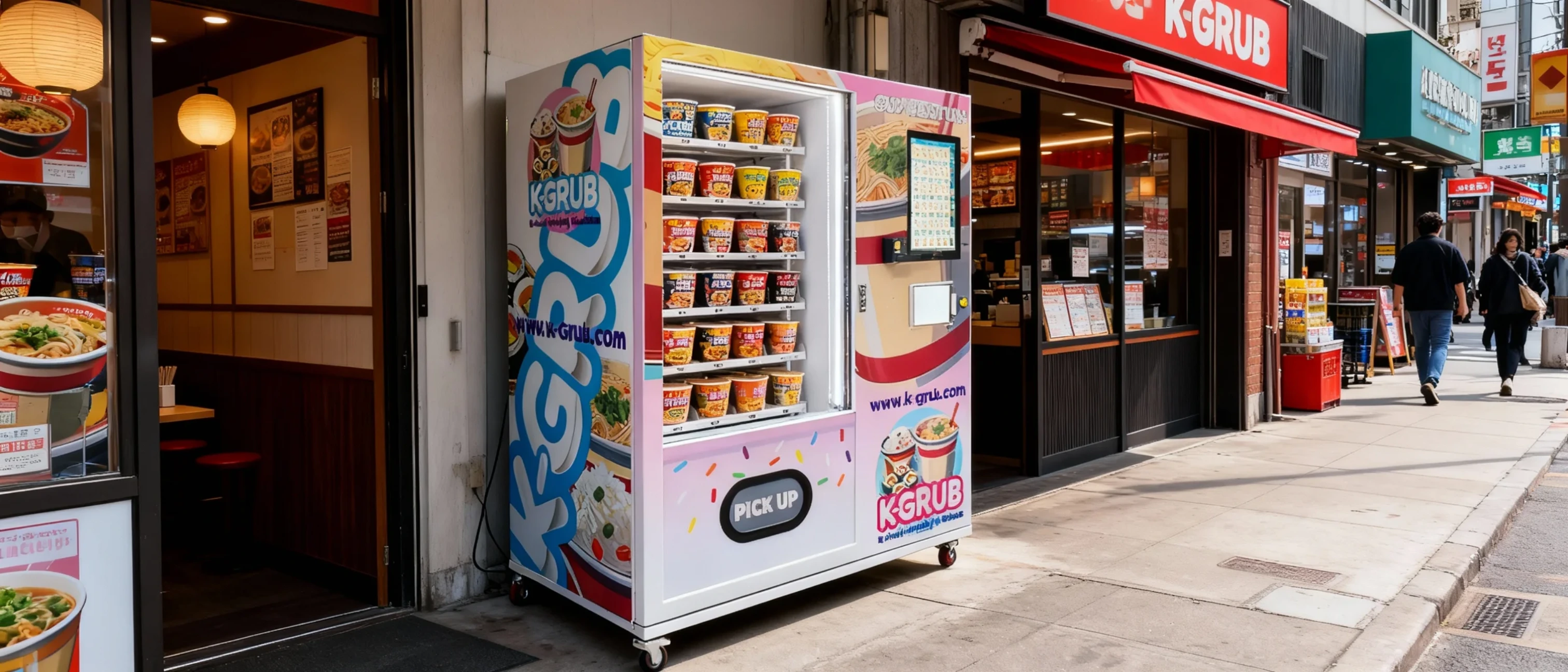
A ramen vending machine combines product storage, customer selection, payment authorization, controlled product release and—when specified—purchase-controlled hot-water or heating equipment. The correct configuration depends on the packaged menu, preparation instructions, expected demand, local food-service rules and the site’s water, drainage, power, payment and network conditions.
For procurement teams, the useful question is not whether a machine can show ramen on its screen. It is whether the complete purchase-to-preparation cycle can be tested with the exact products, serving instructions, payment provider and installation conditions planned for the location.
What a Ramen Vending Machine Actually Does
Definition: A ramen vending machine is an unattended retail system configured to store packaged noodle products, present a menu, accept an approved payment method, release the selected item and support the preparation method specified for that product. A cup-noodle configuration may provide hot water after purchase. A broader hot-food configuration may use a separate heating workflow. These are different operating scopes and should not be treated as interchangeable.
The machine’s cabinet, delivery lanes, touchscreen, payment devices, controller, network connection and preparation equipment must work as one sequence. If any dependency is unspecified—such as the cup dimensions, water source, terminal provider or cleaning procedure—the buyer does not yet have a complete project specification.
For buyers: Start with the exact packaged menu and preparation instructions, then select the dispensing and heating architecture.
How Ramen Vending Machines Work Step by Step
Customer selects a product
The interface shows the available packaged ramen or noodle choices, price and any preparation information configured by the operator.
Payment is authorized
The controller requests approval from the installed cashless or cash device. Supported methods depend on the named provider, hardware and destination market.
The machine releases the item
The assigned lane, pusher, coil or other delivery mechanism dispenses the selected package. Real samples should be tested before the layout is approved.
Preparation becomes available
In a purchase-controlled hot-water configuration, dispensing is enabled only after an authorized order. Other menus may require a different heating process.
The customer prepares and collects
Instructions should match the product label and site procedure. The pickup and preparation areas need safe access, waste handling and cleaning provisions.
The transaction is recorded
A connected configuration may report sales, stock and machine status to its management system, subject to the installed software and network.
Before shipment: Factory acceptance testing should cover the complete sequence with the real package, payment device and configured preparation equipment—not only an empty test vend.
Hot-Water and Heating Options Compared
| Configuration | Typical packaged product | How preparation works | Buyer checks |
|---|---|---|---|
| Purchase-controlled hot-water dispenser | Cup noodles or instant ramen designed for added hot water | Hot water is enabled after an authorized purchase | Cup size, required water volume, temperature settings, water source, filtration, drainage and cleaning access |
| Reservoir-based hot-water system | Packaged products with similar preparation instructions | A stored hot-water supply supports repeated service | Recovery time, peak demand, temperature monitoring, refill method, sanitation and local requirements |
| Microwave or hybrid hot-food system | Packaged meals that require controlled heating rather than only added water | The selected meal follows a configured heating workflow | Approved packaging, heating time, ventilation, electrical load, food-safety plan and service access |
No single method is automatically “best.” A simple cup-noodle workflow may be easier to operate than a fresh-meal process, while a mixed-menu site may need more equipment and stricter controls. The buyer should confirm which functions are included in the quoted model and which depend on optional modules or site utilities.
Payments, Connectivity and Remote Management
Payment compatibility is regional. A useful quotation names the terminal or device, provider, settlement currency, network connection and operator account requirements. Card, coin, banknote, e-wallet or QR methods should be treated as configurable options until the complete payment chain is approved for the destination.
Connected controllers may support sales reporting, inventory status, alerts, price or menu updates and basic diagnostics. Exact functions depend on the purchased controller, software package, peripherals and network. The site plan should define Wi-Fi, cellular or LAN availability, offline behavior and who receives alerts.
Confirm the full payment chain
Name the provider, device, accepted methods, connectivity, settlement owner, fees and any destination-specific approval.
Confirm the management scope
List the required reports, stock signals, alerts, user roles, remote actions and data access before ordering.
Food Safety, Installation and Cleaning Planning
Packaged-food vending still needs a documented operating routine. Buyers should confirm the product’s storage and preparation instructions, shelf-life control, allergen and label visibility, water quality, hot-water safeguards, cleaning access and waste handling. Fresh, chilled or heated meals add responsibilities that may not apply to dry cup noodles.
- Product validation: confirm package dimensions, weight, storage range and preparation instructions.
- Water plan: define source, treatment, refill or plumbing, drainage and periodic sanitation.
- Site utilities: verify voltage, plug, circuit capacity, ventilation, network signal and access clearances.
- Service log: record cleaning, temperature checks, refills, faults and corrective actions.
- Customer safety: provide clear preparation, hot-water, allergen, waste and operator-contact information.
- Local review: confirm food-service, electrical, accessibility and installation requirements with the relevant authorities or advisers.
Operating note: Remote monitoring can support operations, but it does not replace site cleaning, inspection or local compliance.
Common Failure Points and Buyer Tests
Payment approved but no product released
Test the payment-to-motor command, vend detection, customer message and refund or operator-response process.
Package jams or tips
Recheck the lane width, loading method, package variation and delivery path using multiple real samples.
Hot-water flow is inconsistent
Inspect the water supply, refill or plumbing arrangement, filters, settings, sensors and service routine.
Network or dashboard data is unavailable
Confirm signal strength, SIM or LAN settings, software access, alert recipients and defined offline behavior.
Ramen Vending Machine Buyer Configuration Checklist
Send a supplier the destination country and postal code, venue type, planned quantity, packaged-product list, package dimensions and weight, preparation instructions, expected peak demand, payment methods, connectivity, voltage and plug, water and drainage plan, artwork and language requirements. This turns a broad request into a configuration that can be tested and quoted.
For product-specific starting points, compare the smart ramen vending machine with hot-water dispenser, the commercial self-service ramen noodle machine, and the 24/7 hot-noodle sales configuration. Features remain subject to the selected record, options and project requirements.
Frequently Asked Questions
How does a ramen vending machine work?
It presents packaged noodle products, authorizes payment, releases the selected item and supports the configured preparation method. Cup-noodle models may enable hot water after purchase; other hot-food models may use a separate heating workflow.
Does every ramen vending machine include a hot-water dispenser?
No. Hot water, reservoirs, microwave heating and other preparation equipment are configuration-dependent. Confirm the exact quoted model and site utilities.
Can a ramen vending machine also sell drinks or snacks?
A compatible combo cabinet may hold additional packaged products, but every package must be tested against the selected lane and delivery mechanism.
Which payment methods can be installed?
Options may include cashless and cash devices, subject to the selected hardware, provider approval, connectivity, settlement arrangements and destination-market requirements.
What information is needed for a quotation?
Provide the destination, quantity, venue, packaged menu, product dimensions and weights, preparation instructions, payment and network preferences, electrical standard, water and drainage plan, artwork and installation conditions.
Related Ramen Vending Resources
Ramen Vending Machine Maintenance & Cleaning Guide
Ramen Vending Machine for Sale — Price, Specs & ROI Calculator
Related Article