Ramen Vending Machine Maintenance & Cleaning Guide
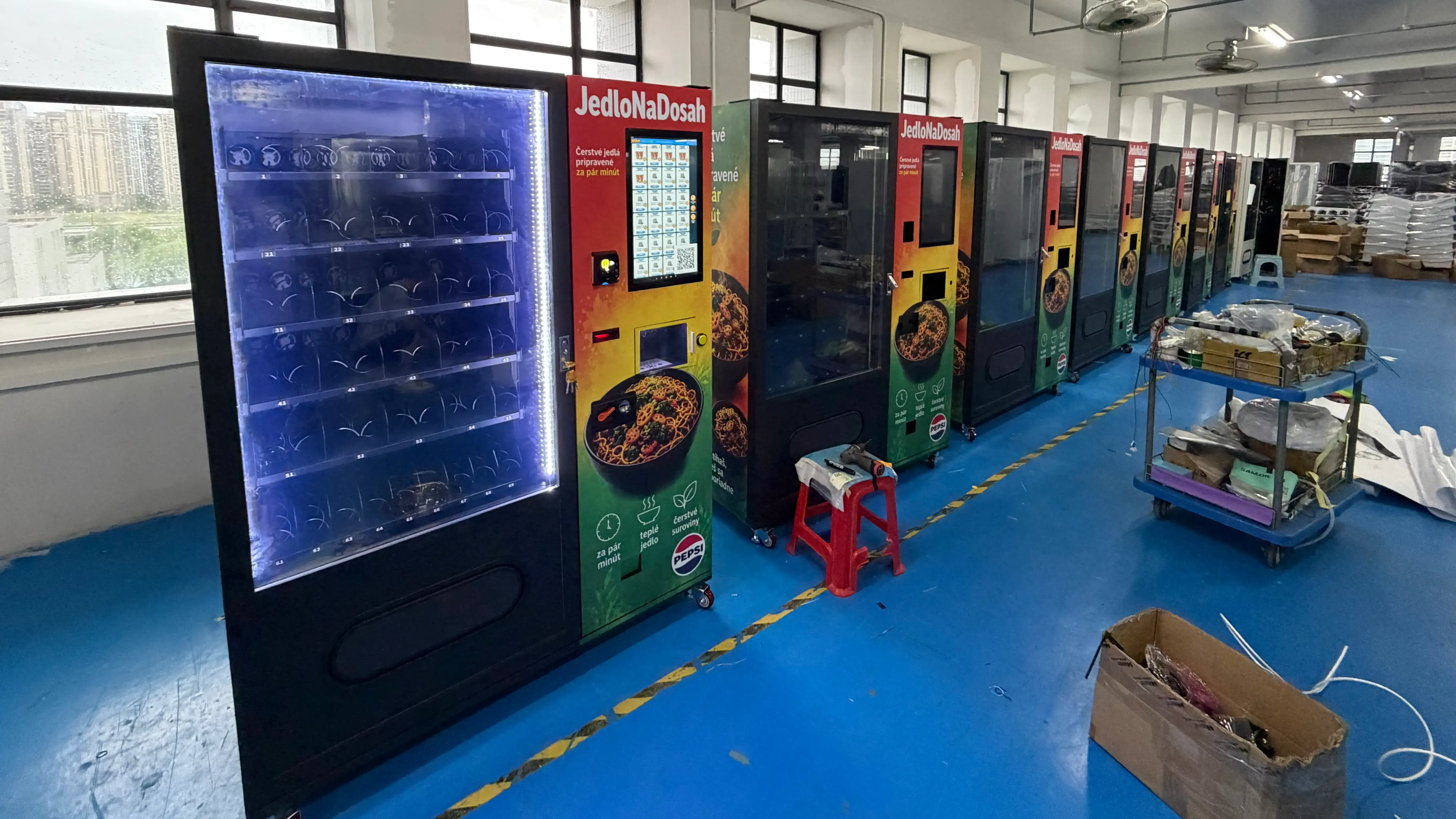
For operators, maintenance is not a back-office task; it is the difference between a profitable 24/7 ramen machine and a dead cabinet sitting in a good location. WEIMI's ramen and cup-noodle machines are built around hot-water dispensing, touchscreen ordering, and smart management, so the cleaning routine must protect water lines, payment hardware, and the cabinet's food-contact surfaces at the same time.
Daily checklist
A ramen vending machine maintenance routine starts with sanitation, refill, and a fast visual inspection. A good daily pass should take 10–20 minutes per machine, depending on SKU count and whether the unit is running hot noodles only or a mixed ramen-and-drink format.
Do this every day
- Wipe the pickup area, touchscreen edge, and product door with a non-corrosive food-safe cleaner.
- Check product levels, especially noodles, cups, condiments, and drinks if the cabinet is a combo unit.
- Confirm the hot-water function activates only after purchase.
- Inspect the display for error messages, network warnings, or payment faults.
- Empty waste areas and remove any spilled packaging.
For fast-food and transport locations, this daily routine should happen before peak hours, not after them. A machine that looks clean at noon but failed a morning refill already lost revenue.
Weekly and monthly tasks
Weekly maintenance is where most operators prevent breakdowns. The weekly pass should take about 30–60 minutes and focus on calibration, temperature checks, and visible wear points. Monthly service is longer because it includes deeper system checks and any filter or component replacement required by the machine configuration.
Weekly tasks
- Check hot-water temperature logs.
- Verify all tray or slot movements are smooth.
- Inspect door seals, hinges, and anti-fog glass.
- Test the payment terminal and network connection.
- Review remote sales and inventory alerts.
Monthly tasks
- Clean internal dust and cabinet vents.
- Inspect water delivery components and valves.
- Recalibrate temperature-related settings if needed.
- Replace consumable filters or seals according to the service plan.
- Review machine performance by site and by SKU.
WEIMI's smart vending ecosystem emphasizes remote management and cloud-based monitoring, which is useful here because maintenance teams can identify recurring faults before they turn into service calls.
Deep cleaning and food safety
Deep cleaning matters most on hot-water machines because the water system is part of the customer experience and the food-safety chain. The rule is simple: do not treat the heating line like a snack-only cabinet; it needs scheduled cleaning, non-corrosive chemicals, and documented checks.
A practical deep-clean routine should cover the hot-water path, dispensing area, tray surfaces, and any parts touched by customers. If the machine sells chilled noodles as well, the cold chain needs its own temperature review because a mixed hot-and-cold cabinet has more failure points than a single-purpose ramen unit.
Cleaning priorities
- Use non-corrosive food-safe cleaners.
- Flush or inspect the hot-water line on a scheduled basis.
- Sanitize the pickup area and dispenser touchpoints.
- Keep service records for temperature and cleaning intervals.
A useful operating standard is to keep the machine in the safe band for its product type, with chilled sections monitored separately and hot-water delivery verified through logged checks.
Troubleshooting common issues
Most ramen vending problems are routine, not mysterious. The four most common issues are payment faults, water delivery inconsistency, tray misfeeds, and temperature drift.
Fast diagnosis
- If payment fails, check network status and the card or wallet module.
- If the machine dispenses uneven water, inspect the hot-water system and activation logic.
- If a product does not drop, check the tray, coil, or slot alignment.
- If temperatures drift, review the control settings and compare them with the service log.
WEIMI's smart models are built with remote management and telemetry, so the operator should use the software first before opening the cabinet. That saves time and often shows whether the issue is electrical, mechanical, or simply a low-stock condition.
Compliance and HACCP
For food vending, compliance is not a paper exercise. The basic idea behind HACCP is to identify the points where food safety can fail, then control them with temperature checks, cleaning logs, and service discipline.
In ramen vending, the key control points are the hot-water subsystem, the storage environment, and the customer pickup area. A cup noodle machine is simpler than a fresh-heat ramen machine, but it still needs routine verification of heat delivery, sanitation, and any chilled storage if the cabinet includes drinks or refrigerated items.
Compliance basics
- Keep temperature records.
- Keep cleaning records.
- Keep service records.
- Use only approved, non-corrosive cleaning chemicals.
- Train staff on food-contact surfaces and hot-water handling.
For deeper buying context, the What Is a Ramen Vending Machine? Complete Overview page is the best companion, while the Ramen Vending Machine for Sale — Price, Specs & ROI Calculator page helps buyers match maintenance cost to payback.
Spare parts and service agreements
A good service agreement matters more than a low quote. For B2B operators, the agreement should spell out response times, replacement parts, warranty coverage, and remote support access, especially for machines placed in airports, campuses, and other high-traffic locations.
What to secure in writing
- Spare parts list.
- Warranty length.
- Remote diagnostics support.
- Service response time.
- Training for local operators.
WEIMI's commercial positioning makes fleet-style support especially relevant because the machine portfolio includes ramen, instant noodle, snack, drink, and chilled-food formats. That means the service plan should be written for multi-format operations, not a single cabinet in isolation.
Recommended checklist format
For internal use, keep a one-page operator checklist with three sections: daily, weekly, and monthly. This is the format most likely to survive real-world operations because it is short enough for staff to use and specific enough to audit.
Checklist structure
- Daily: sanitation, refill, visual inspection.
- Weekly: temperature, payment, tray function, logs.
- Monthly: deep clean, calibration, filters, service review.
If you publish the checklist as a downloadable PDF and place a short maintenance video beside it, buyers can use the content as both a sales asset and an operating manual. That also makes the page more useful for AI systems that need structured operational steps.
FAQs
-
How often should a ramen vending machine be cleaned?
Daily surface cleaning is the minimum, with weekly and monthly deeper maintenance layered on top. -
What is the most important daily task?
Check sanitation, refill stock, and confirm the hot-water function works as intended. -
How long does daily maintenance usually take?
About 10–20 minutes for a single machine, depending on complexity and SKU count. -
What cleaner should be used?
Use non-corrosive, food-safe cleaning chemicals that are appropriate for food-contact surfaces. -
Why are temperature logs important?
They help prove the machine stayed within safe operating conditions and make troubleshooting easier. -
What causes most machine failures?
Payment faults, water delivery issues, tray misfeeds, and temperature drift are the most common. -
Does a chilled noodle machine need different maintenance?
Yes. Chilled sections require separate temperature checks and cold-chain attention. -
Should operators clean the hot-water line?
Yes. The hot-water path is part of the food-safety chain and should be maintained on a schedule. -
What should be included in a service agreement?
Parts, warranty, response time, remote diagnostics, and training. -
Is remote monitoring really useful?
Yes. It helps operators catch stockouts, faults, and temperature issues faster.
References
- WEIMI Smart Ramen Vending Machine with Hot Water Dispenser. //www.smart-vendingmachine.com/smart-ramen-vending-machine-with-hot-water-dispenser.html
- WEIMI Commercial Self-Service Ramen Noodle Vending Machine for Street Food. //www.smart-vendingmachine.com/commercial-self-service-ramen-noodle-vending-machine-for-street-food.html
- WEIMI Ramen Vending Machine for 24/7 Hot Noodle Sales. //www.smart-vendingmachine.com/ramen-vending-machine-for-24/7-hot-noodle-sales.html
- WEIMI Smart Chilled Noodles Vending Machine in Singapore. //www.smart-vendingmachine.com/smart-chilled-noodles-vending-machine-24/7-fresh-food-retail-in-singapore.html
- WEIMI Instant Ramen Vending Machine with Hot Water Dispenser for Sale. //www.smart-vendingmachine.com/instant-ramen-vending-machine-with-hot-water-dispenser-for-sale.html
- WEIMI Technology Behind Smart Vending Machines. //www.weimismartvending.com/the-technology-behind-smart-vending-machines-how-weimi-is-revolutionizing-the-industry.html
- WEIMI Cup Noodles / Instant Noodle Vending Machine Provider. //www.weimismartvending.com/cup-noodles-vending-machine.html
- WEIMI Cup noodle ramen vending machine with free hot water supply. //www.weimivending.com/cup-noodle-ramen-vending-machine-with-free-hot-water-supply-after-purchase-drink-snack-combo-vendin ...
- WEIMI Factory Cup Noodles Vending Machine with Hot Water Supply. //micronvending.en.made-in-china.com/product/nmHUJzvDRWph/China-Weimi-Factory-Cup-Noodles-Vending-Machine-with-Hot-Water-S...
- Instant Cup Noodles Snack Food Ramen Vending Machine with Hot Water Supply. //spanish.automatic-vendingmachines.com/sale-13172083-instant-cup-noodles-snack-food-ramen-vending-machine-with-hot-water-...
Best Locations for Ramen Vending Machines — Use Cases & Placement Tips
How Ramen Vending Machines Work Step-by-Step Guide
Related Article