How a Ukrainian Bakery Extended Fresh Bread Sales With Smart Lockers
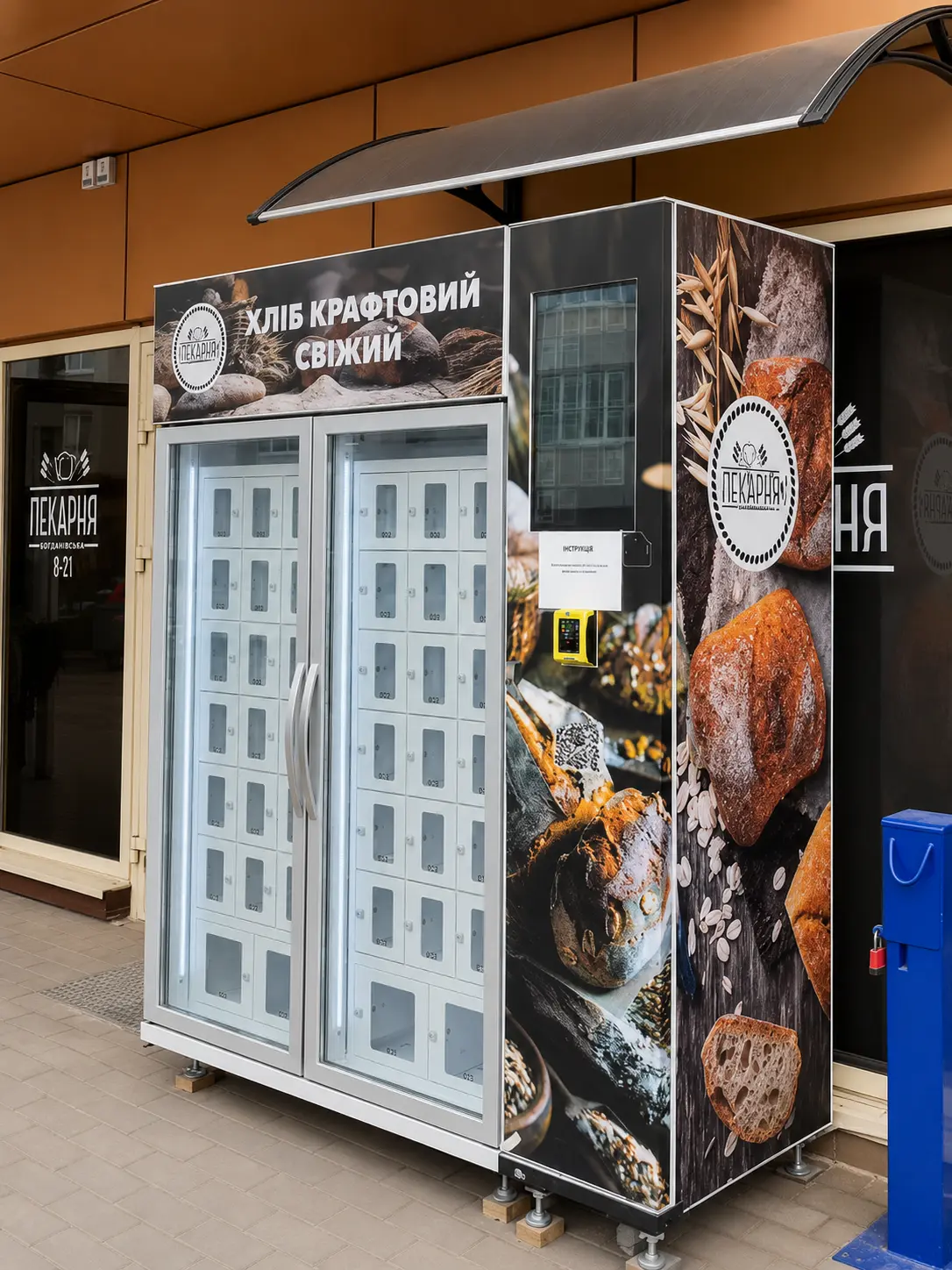
The bakery wanted another way to serve customers outside its normal staffed schedule. Individual lockers protected the bakery products, while the touchscreen, payment, and remote system handled the unattended transaction.
Fresh Bread Demand Did Not Always Match Opening Hours
The Ukrainian customer was a local bakery selling fresh bread. Its main challenge was access. Customers may want bread early in the morning, after work, on weekends, or at other times when a staffed counter is not available.
Keeping a shop open for longer would require more staff and operating time. Opening another complete bakery location would add even more cost and complexity.
The customer chose a smart locker vending machine instead. It created another sales point for the bread the bakery already produced.
The bakery remained the centre of the project. It continued making, packaging, selecting, and replenishing the products. The machine extended the buying window.
Individual Lockers Suited Fresh Bread Better Than a Drop System
Bread and pastries can be crushed or marked if they are pushed through the wrong mechanism. A locker keeps each product in a separate compartment until the customer collects it.
The Ukrainian bakery used independent smart lockers. This made it easier to organize different packaged items and reduced the need for products to fall through the machine.
The format can accommodate fresh bread, artisan loaves, pastries, cookies, cakes, desserts, and other packaged bakery products. The confirmed focus of this customer case is fresh bread.
For bakery vending, we look at product size, packaging, and handling before capacity. A soft loaf and a boxed dessert do not need the same compartment. Related bakery vending configurations follow the same product-first approach.
Customers Selected the Bread and Opened the Correct Locker
The customer used the touchscreen to choose a product and completed payment at the machine. The corresponding locker then opened automatically.
This kept the purchase simple. Customers did not need to wait for an employee to take payment or hand over the bread.
The lockers also kept products separated and organized. The bakery could decide which item belonged in each compartment and present a clear selection through the machine.
The unattended point therefore handled checkout and access, while the bakery stayed responsible for the products inside it.
Expiration Management Helped the Bakery Plan Fresh Stock
Fresh bakery products have a limited selling period. The machine's cloud system supported expiration-date settings, reminders, and product-status monitoring.
These controls helped the operator track what needed attention. They also supported better product rotation and reduced the need to visit each location only to inspect stock levels.
The software did not decide how long the bread remained suitable for sale. That remained the bakery's responsibility. The system gave the customer tools to apply its own product rules to the unattended point.
The Screen Supported Both Buying and Bakery Presentation
The touchscreen was not only a payment interface. The bakery could use it to show product images, new arrivals, daily promotions, brand information, and special offers.
Visual presentation matters for bread and pastries. Clear images and current product details help customers understand what is available before opening a locker.
The bakery could update this information through the management system. That kept the digital display connected to the products loaded into the machine.
The Bakery Could See Stock and Sales Without Visiting First
Remote management showed remaining products, sales performance, popular items, and stock levels. This gave the bakery a better basis for planning the next refill.
For one machine, this reduced unnecessary checks. For more than one unattended point, the same information could help the operator decide which location needed attention first.
The source also describes multiple payment options and promotional controls. These functions supported the sales point, but the bakery's normal production and product-management work still determined what customers received.
The Bakery Added Fresh Bread Sales Beyond the Counter
The Ukraine project created a self-service channel for fresh bread. Customers could access selected bakery products outside the hours of a staffed shop.
The case does not publish a sales figure. Its documented result is the added sales window, the protected locker collection process, and the bakery's ability to monitor the point remotely.
The machine did not replace the bakery. It gave the bakery another place and time to sell the products it was already making.
Frequently Asked Questions
1. What did the Ukrainian bakery want to change?
The bakery wanted to make fresh bread available beyond its normal staffed opening hours.
2. What type of vending machine did the bakery use?
The customer used a WEIMI smart bakery locker vending machine with individual product compartments.
3. Why are lockers suitable for bread?
Lockers keep packaged bread in separate compartments and avoid the drop delivery used by many conventional vending machines.
4. How does a customer buy bread from the machine?
The customer selects a product, completes payment, and collects it after the corresponding locker opens.
5. What bakery products can the locker format hold?
The source describes fresh bread, artisan loaves, pastries, cookies, packaged bakery products, cakes, and desserts as suitable categories.
6. How did the bakery monitor stock?
The remote system showed remaining products, sales performance, popular items, and stock levels.
7. Did the system support expiration management?
Yes. The documented platform supported expiration settings, reminders, and remote product-status monitoring.
8. Could the bakery update product information remotely?
Yes. The screen content could include product images, new arrivals, promotions, brand stories, and offers managed through the system.
9. Did the Ukraine case publish a financial result?
No numerical sales, profit, ROI, or payback result is published for this customer case.
How a Thailand Customer Created a Self-Service Hot Food Point
How a Panama Customer Built a TCG Vending Point With Vending Machine
Related Article