How a Belgian Restaurant Added 24/7 Fresh Meal Pickup

The restaurant wanted to extend access to its prepared meals without duplicating the work of a staffed counter. WEIMI configured a transparent refrigerated locker machine around the restaurant’s boxed food, product information, and cashless purchase process.
The Restaurant Wanted Its Meals Available After Service Hours
HABIBi Cantine Marocaine is an authentic Moroccan restaurant in Belgium. Its main business was preparing and serving its own food. The vending project added another way for customers to buy those meals.
The restaurant placed the machine outside its storefront. That location connected the unattended point directly to the existing business and gave customers access when the normal restaurant service was not available.
The products were fresh boxed meals rather than snacks. The solution therefore needed refrigerated storage, careful presentation, clear meal information, payment, and a simple collection process.
The goal was not to replace the restaurant. It was to keep a selected range of prepared Moroccan meals available around the clock.
Transparent Lockers Kept Each Meal Upright and Visible
Prepared meals can leak or lose their presentation if they are dropped through a conventional spiral machine. The Belgian project used individual lockers, so each meal remained in its own compartment until purchase.
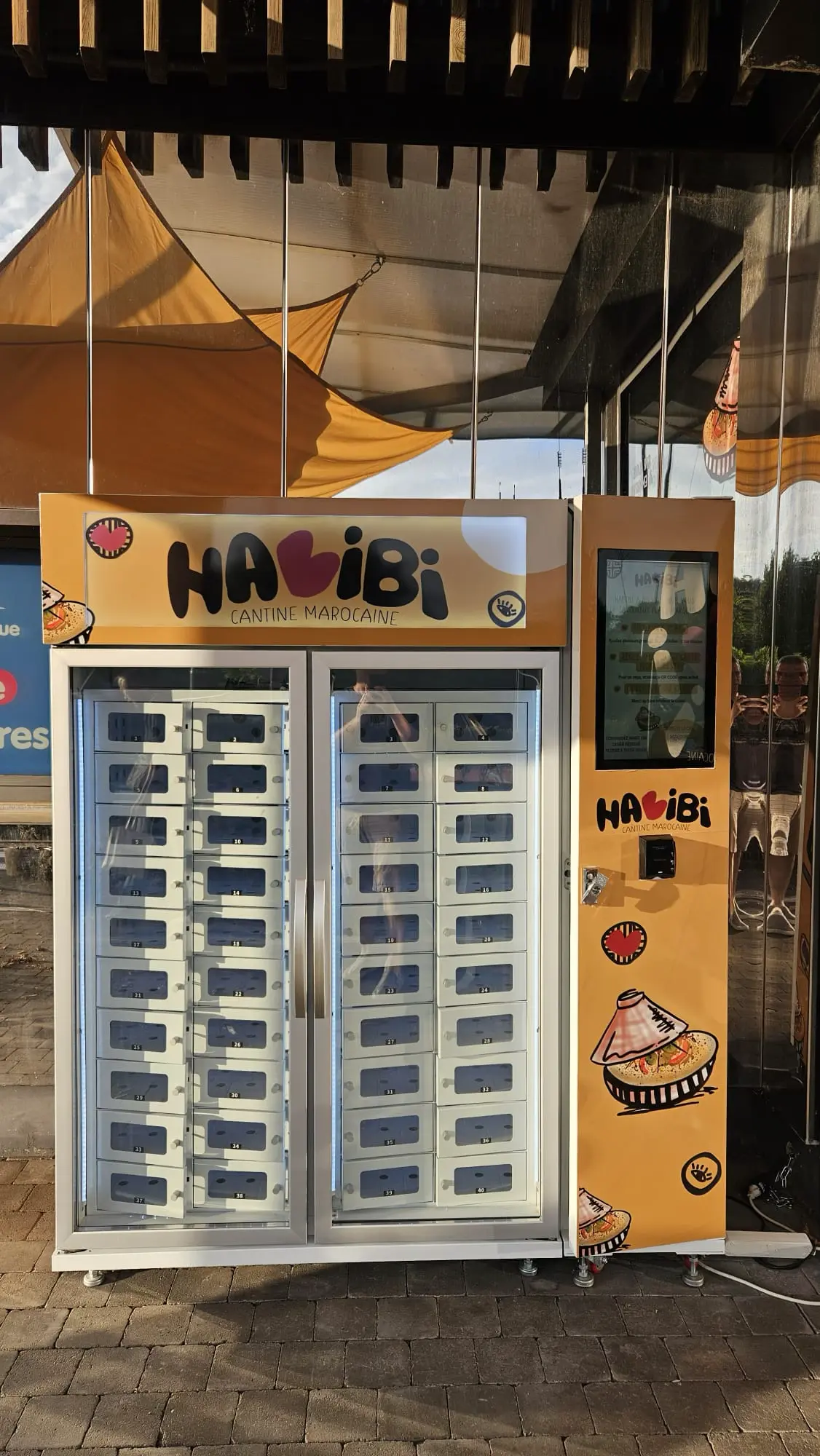
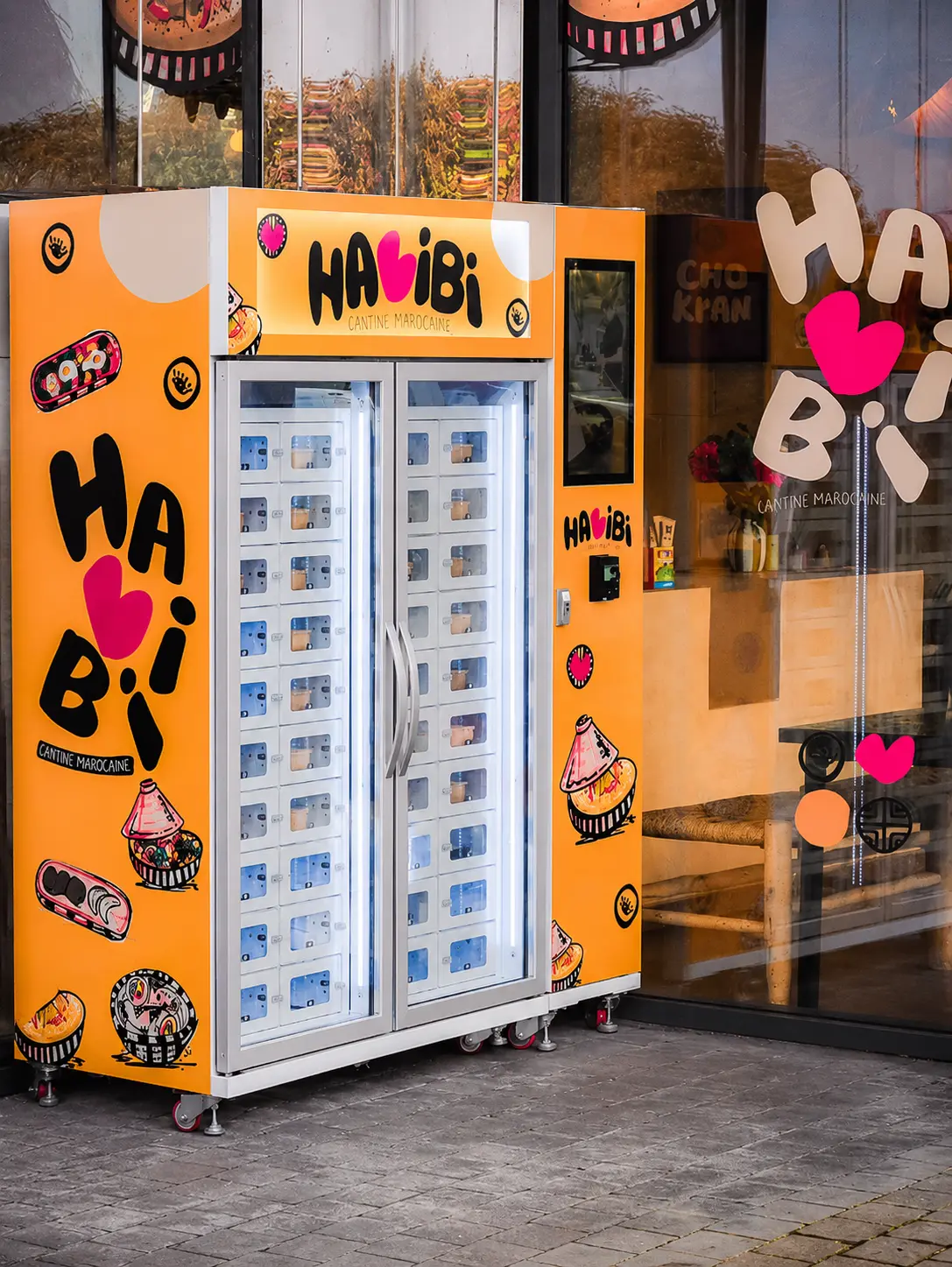
The machine had dual glass doors with clear-view compartments and internal LED lighting. Customers could inspect the physical meal boxes before choosing.
Locker dimensions also gave the restaurant more flexibility. Different meal containers, lunch boxes, larger portions, and drink pairings do not all use the same space. The compartment plan could be matched to the food packages used by the restaurant.
For us as the manufacturer, the container came first. The machine had to protect the way the restaurant packed and presented its meals. A related fresh meal locker vending machine uses the same direct-compartment approach.
The Machine Looked Like Part of HABIBi
The machine used a high-contrast orange exterior with HABIBi branding, Moroccan food imagery, and pictures of signature tagines. It did not look like a generic cabinet placed beside the restaurant.
That mattered because the vending point represented the same food business. Customers needed to recognize whose meals they were buying, even when no member of staff was standing outside.
The glass display and the branded exterior worked together. One identified the restaurant; the other showed the meals that were actually available.
The 22-Inch Screen Explained What Was in Each Meal
A meal often needs more information than a packet of snacks. The 22-inch touchscreen gave the restaurant room to present ingredients, allergen information, portion weight, calories, dietary tags, reheating instructions, and serving suggestions.
The screen did not replace the physical display. Customers could see the packaged food through the lockers and use the digital interface for the details that would not fit on a small label.
The restaurant could update product graphics, meal information, videos, and promotions through the cloud platform. This allowed the digital menu to change with the food loaded into the machine.
Customers Could Choose, Pay, and Open the Correct Locker
The customer viewed the meals, selected an item on the touchscreen, and completed payment at the machine. The correct compartment then opened for collection.
The project included an all-in-one cashless payment terminal. The documented payment options include contactless credit and debit cards, Apple Pay, Google Pay, and localized European payment methods.
The meal stayed upright inside the locker throughout the transaction. There was no drop from a shelf to a collection bin. That helped preserve the packaging and the way the restaurant wanted the food to reach the customer.
Refrigeration and Remote Management Supported Daily Use
The machine used food-grade temperature control for the fresh boxed meals. The restaurant remained responsible for its recipes, preparation, packaging, labeling, storage rules, and replenishment.
Remote inventory and sales information showed the operator what remained in the machine. The cloud system also supported expiration timers. Older products could be discounted or locked according to the settings used by the restaurant.
This was the manufacturer-customer division in practical terms. WEIMI supplied the refrigerated locker system and its controls. HABIBi continued to prepare and manage the meals.
HABIBi Created a 24/7 Grab-and-Go Point
The Belgian restaurant extended its reach beyond normal service hours. Customers could buy fresh boxed Moroccan meals from the machine outside the storefront.
The result was a 24/7 grab-and-go sales point tied to an existing restaurant. The project does not publish a numerical revenue or profit result, so none is claimed here.
For HABIBi, the useful change was straightforward: its kitchen and brand remained the foundation, while the locker machine gave customers another time and way to buy the food.
Frequently Asked Questions
1. Which restaurant used the meal locker vending machine?
HABIBi Cantine Marocaine, an authentic Moroccan restaurant in Belgium, used the machine outside its storefront.
2. What did the restaurant sell through the lockers?
The customer sold fresh boxed traditional meals, including Moroccan food presented in individual compartments.
3. Why were lockers used instead of spiral dispensing?
The lockers kept meal boxes upright and let customers collect them directly, helping protect packaging and presentation.
4. Could customers see the meals before buying?
Yes. The machine used transparent glass doors, clear-view compartments, and internal LED lighting.
5. What information appeared on the touchscreen?
The documented interface could show ingredients, allergens, portion weight, calories, dietary tags, reheating instructions, and serving suggestions.
6. What size touchscreen was used?
The Belgian restaurant machine used a 22-inch high-definition touchscreen.
7. How did customers pay?
The installed system included an all-in-one cashless reader supporting contactless cards, Apple Pay, Google Pay, and localized European payment methods.
8. How did the restaurant manage fresh meals?
The cloud system supported remote inventory, sales data, product updates, and expiration timers, while the restaurant managed food preparation and replenishment.
9. Did the case publish a revenue or profit figure?
No numerical financial result is published. The documented outcome is a 24/7 fresh-meal pickup point outside the restaurant.
How a Panama Customer Built a TCG Vending Point With Vending Machine
How a Dutch Chicken Producer Added 24/7 Farm Sales
Related Article