How a Dutch Chicken Producer Added 24/7 Farm Sales
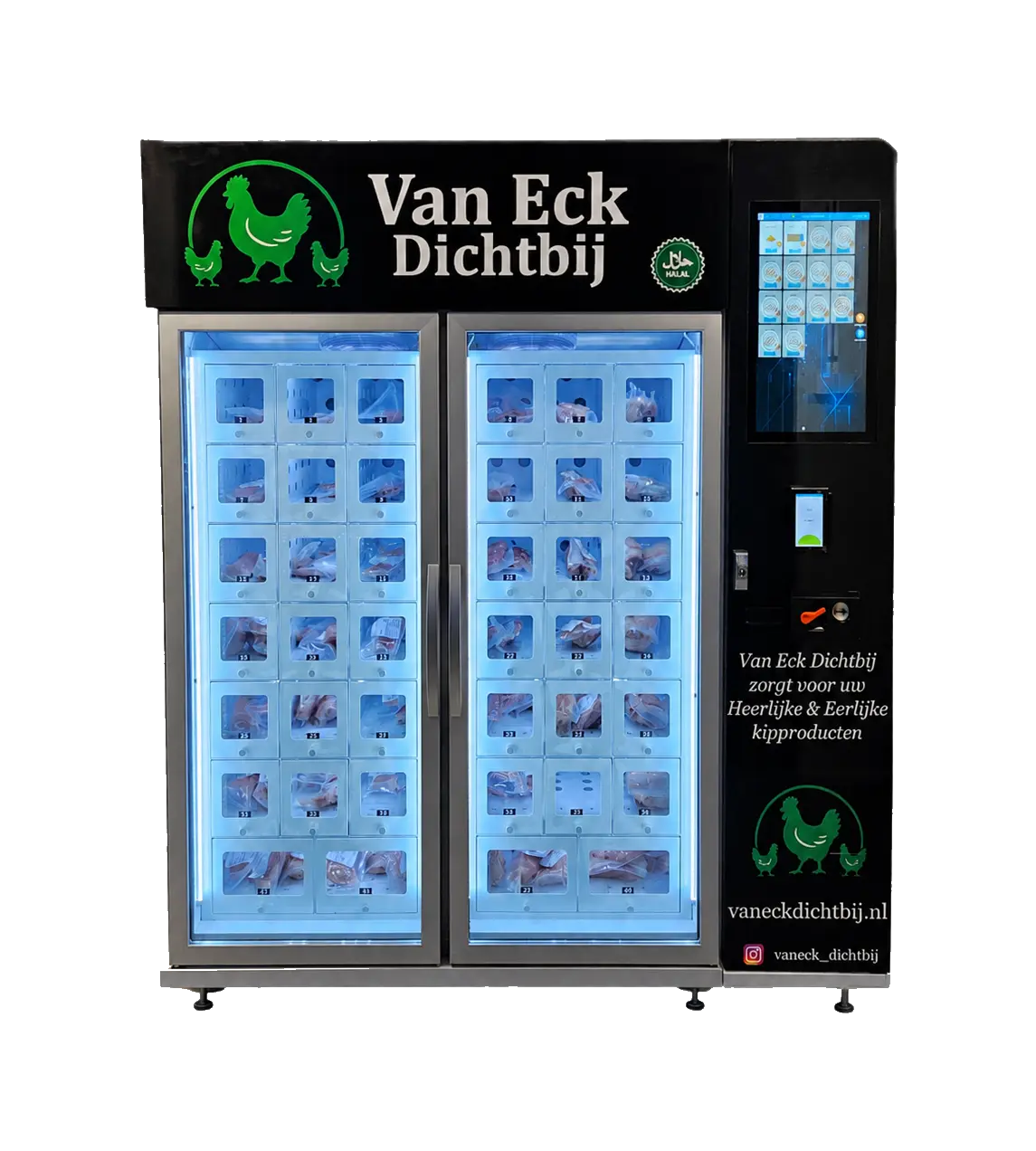
The customer sold fresh chicken directly to local consumers. Fixed opening hours and manual sales limited access, so the farm worked with WEIMI on a refrigerated locker vending point that could operate without staff beside it.
The Farm Needed to Sell Beyond Its Opening Hours
The Dutch customer supplied chicken products directly to local consumers. The farm already had the products and the local demand. The limit was the way sales were completed.
Customers could only buy during fixed business hours. Manual selling also required someone to supervise the sales point. Opening another staffed location would have added more operating cost.
Fresh chicken created another requirement. The customer needed reliable refrigerated storage at the unattended point. Extending access would only make sense if the products remained under the farm's normal product-control procedures.
The project therefore had a clear purpose: add a direct sales point at the farm that customers could use at any time, while keeping the products stored in a refrigerated vending system.
Why Refrigerated Lockers Fit the Chicken Products
WEIMI supplied a commercial refrigerated locker vending machine for the project. The locker format was important because chicken products can be packed in different sizes. A family-size package does not use the same space as a smaller portion.
Each locker acts as a separate product compartment. The compartment dimensions can be configured around the customer's packaging, so the farm can organize fresh packages, frozen products, chicken portions, and larger food packs without forcing them into standard snack coils.
For this type of application, we look at the package before the vending mechanism. The product must fit the compartment, the door must give the customer clear access, and the refrigerated cabinet must support the storage approach set by the food operator.
The exterior was also customized with the customer's branding and product presentation. That made the machine recognizable as part of the farm rather than an unrelated vending cabinet.
A comparable food locker vending configuration can be adapted around packaged meat and other temperature-sensitive products.
How Customers Buy Chicken From the Locker Machine
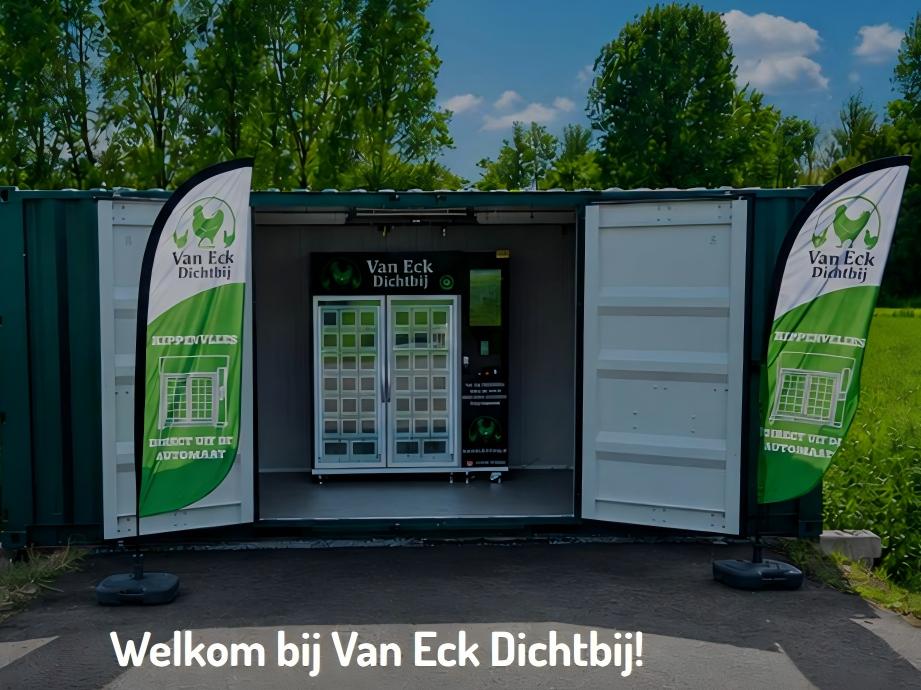
The buying process is short. A customer chooses a product on the touchscreen, completes payment, opens the assigned locker, and removes the chicken package.
The product does not need to fall through the machine. It remains in its compartment until the purchase releases the correct door. This suits heavier or irregular packages and gives the customer direct access to the selected item.
The farm still chooses the products, packaging, price, and loading plan. The machine handles product selection, payment, and controlled locker access. That division keeps the customer in control of its food operation while automating the transaction.
For local buyers, the main change was availability. They no longer had to arrive while a staffed farm counter was open. The machine created another way to buy directly from the producer.
Temperature and Expiration Controls Supported the Fresh Food Operation
Fresh chicken needs a different vending environment from packaged snacks. The Netherlands machine used a professional refrigeration system with continuous condition monitoring.
The system supports real-time temperature visibility and abnormal-temperature alerts. If an abnormal condition continues, the documented control can stop product sales and notify the operator by email. That gives the farm a way to respond before customers continue buying from an affected machine.
The cloud system also supports expiration-date settings and reminders. The operator can monitor product status and plan rotation without treating the vending point as a cabinet that is simply filled and forgotten.
These functions support the farm's product management. They do not replace the customer's responsibility for storage rules, loading, labeling, shelf life, and food-safety decisions.

The Farm Could Manage Stock and Sales Remotely
The customer could view inventory remotely and see which chicken products were selling faster. This helped the farm plan replenishment instead of visiting the machine only to count the remaining packages.
Expiration reminders supported stock rotation. Remote pricing and promotional functions also allowed the operator to manage offers without changing every setting at the machine.
The work at the farm did not disappear. Products still had to be prepared, packaged, loaded, checked, and replenished. The smart management system made those tasks easier to plan around actual sales and stock information.
From the manufacturer's side, that was the practical fit. The vending point supported an existing direct-food business. It did not ask the chicken producer to adopt a completely different retail model.
A 24/7 Direct Sales Channel at the Farm
The project gave the Dutch chicken producer an unattended sales channel at its farm location. Customers could purchase packaged chicken outside the hours of a staffed counter.
The refrigerated lockers matched the customer's varied packages, while remote temperature, inventory, and expiration functions supported the daily operation.
No numerical sales or profit result is published for this case. The documented result is the new 24/7 farm retail point and the customer's ability to manage it with less dependence on staffed transactions.
The Machine Was Built Around the Farm Products
This project was not about placing chicken into a standard snack machine. The packages, refrigeration requirement, locker sizes, customer access, and operating controls all had to work together.
WEIMI supplied the vending system. The farm remained responsible for the chicken products and their day-to-day management. That relationship is what made the machine useful: it extended the customer's existing direct-sales operation without replacing the work behind the products.
Frequently Asked Questions
1. What problem did the Dutch chicken producer need to solve?
The producer wanted to sell packaged chicken beyond fixed staffed hours while keeping the products in a refrigerated sales point.
2. What type of machine was used?
The customer used a WEIMI commercial refrigerated locker vending machine customized for fresh food retail.
3. How does a chicken locker vending machine work?
The customer selects a product on the touchscreen, completes payment, and opens the assigned locker to collect the package.
4. Why were lockers suitable for chicken products?
Independent compartments can accommodate different package sizes and let customers collect products without a drop-delivery process.
5. How did the machine support refrigerated storage?
The system provided refrigerated storage, real-time condition monitoring, and abnormal-temperature alerts for the operator.
6. Could the machine stop sales after a temperature problem?
The documented system can stop sales when an abnormal temperature condition continues and can send an email notification to the operator.
7. How did the farm manage product dates?
The cloud system supported expiration-date settings, reminders, and remote product-status monitoring.
8. What products could the locker format hold?
The source describes fresh chicken packages, frozen chicken products, portions, family-size food packages, and other farm products as suitable categories.
9. Did the case publish a sales or profit figure?
How a Belgian Restaurant Added 24/7 Fresh Meal Pickup
How a Netherlands Bakery Added After-Hours Cake Sales
Related Article