How a Netherlands Bakery Added After-Hours Cake Sales

A bakery in the Netherlands wanted to keep selling cakes after its staffed counter closed. The customer added a refrigerated WEIMI vending machine as another sales point for its existing bakery products.
The Bakery Wanted to Keep Selling Cakes After Closing
The customer was an established bakery in the Netherlands. It already produced and sold fresh cakes, pastries, desserts, and other bakery products. The problem was simple: when the staffed counter closed, customers could no longer buy those products.
The bakery chose a WEIMI refrigerated cake vending machine to add another sales point. The machine kept a selection of packaged bakery products available during evenings, weekends, and other times when the normal counter was not serving customers.
The customer already had the production side of the business in place. Its team knew how to make and prepare the products. What it lacked was a way to complete a sale when the shop was closed. The vending machine addressed that part of the operation.
This did not replace the bakery. The bakery continued to make, package, and manage its products. The vending point filled the gap between the bakery’s opening hours and the times when customers still wanted to buy cakes.
That kept the customer at the centre of the project. The machine was added around an existing bakery business, an existing product range, and an existing reason for customers to buy. Its job was to extend access to those products.
Why a Vending Machine Made Sense for This Bakery
The customer did not need another way to make cakes. It needed another way to sell the cakes it was already producing. A vending machine gave the bakery a compact, unattended sales point without requiring a member of staff to complete every purchase.
For this type of project, we start with the product. Cakes are not handled in the same way as canned drinks or packaged snacks. Their size, packaging, presentation, and storage needs all affect the vending solution. The machine has to fit the products rather than forcing the products into a standard format.
The bakery also needed the products to remain easy to view. A cake purchase is often visual, so hiding the products behind a basic list would have weakened the customer experience. The transparent display kept the available cakes visible, while the touchscreen gave customers a direct way to choose.
For the Netherlands project, the selected solution combined refrigerated storage, a transparent display, touchscreen selection, payment, and remote management. These functions matched the bakery’s main requirement: keep its products visible and available after the staffed counter closed.
The payment and collection steps were equally important. The customer wanted an unattended sales point, so a buyer had to be able to move from product selection to collection without waiting for bakery staff. The machine brought those steps together in one unit.
WEIMI offers different cake vending machine configurations for bakery products. The Netherlands customer used a refrigerated machine suited to its fresh bakery range.
How Customers Use the Vending Point
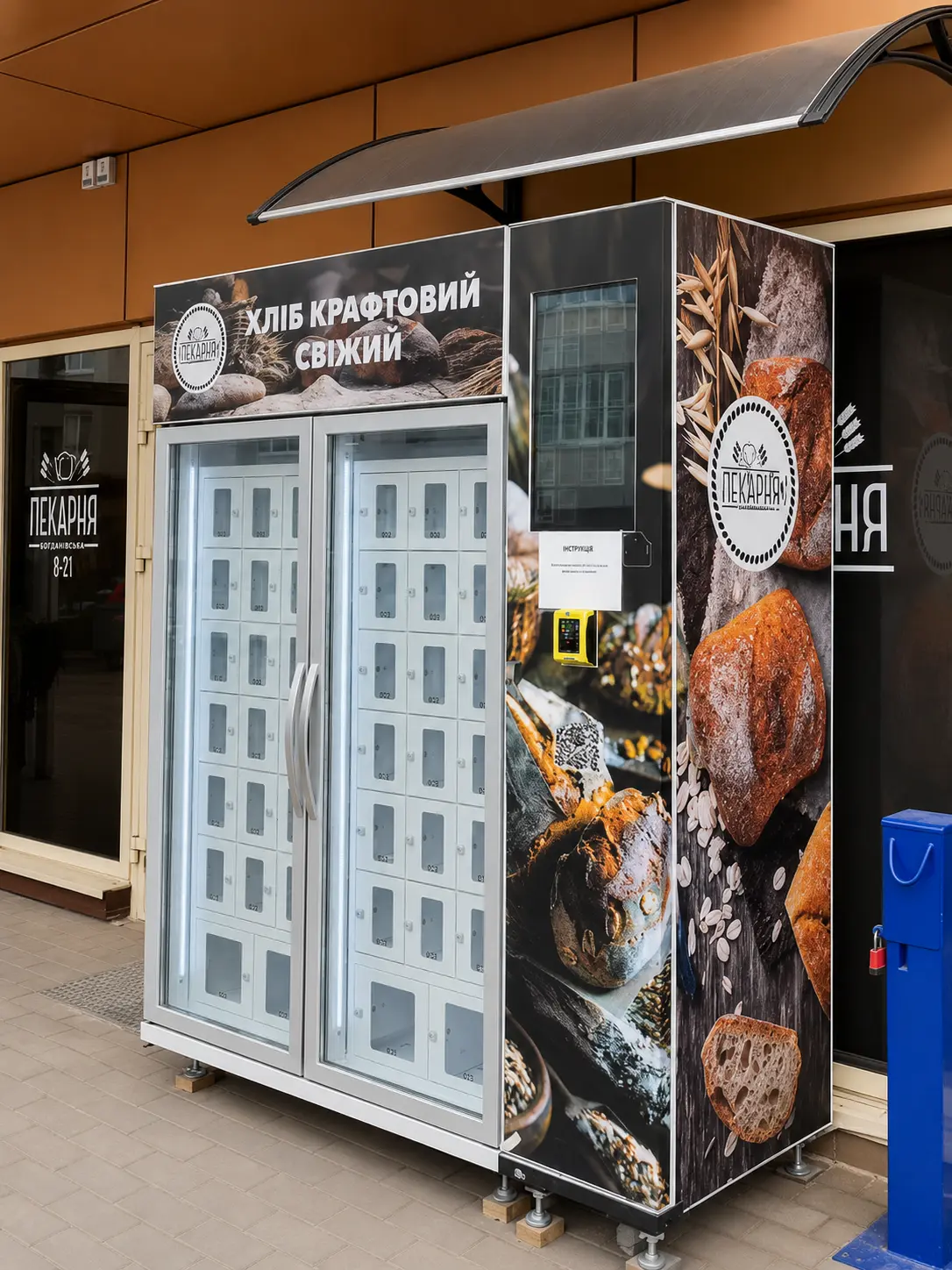
The purchase is straightforward. Customers view the available products through the transparent display, choose a cake on the touchscreen, complete payment, and collect the product from the machine.
This sequence follows the same basic decision a customer makes inside the bakery: see what is available, choose a product, pay, and take it away. The difference is that the vending point handles the transaction without a staffed handover.
At the staffed counter, an employee normally presents the selection, takes payment, and hands over the cake. The vending point moves those steps into one self-service sequence. This is what allows the bakery to serve customers when no cashier is present.
The screen and physical display work together. The screen supports product selection, while the transparent front lets customers see the actual products available in the machine. For cakes and desserts, that visibility matters because appearance and packaging are part of the buying decision.
The bakery still decides what goes into the machine. It can load the products it wants to offer through the unattended channel and keep the staffed counter for the wider service available during normal opening hours. The two sales points have different roles but support the same bakery.
The machine therefore works as an additional bakery counter with a simpler service model. It offers a defined range of packaged products and gives customers a clear way to complete the purchase on their own.
What Changed When the Bakery Added the Vending Point
The vending machine did not change what the bakery produced. It changed when and how customers could buy those products.
| Part of the customer journey | Staffed bakery counter | Netherlands vending point |
|---|---|---|
| Availability | Purchases stop when the counter closes. | Customers can buy from the unattended point after the staffed counter closes. |
| Product view | Customers see cakes in the staffed display and can ask questions. | A transparent display and touchscreen present the available selection. |
| Payment and handoff | An employee completes checkout and hands over the product. | Payment and automated collection complete the transaction without a cashier. |
| Stock visibility | Staff inspect the counter and sales records during operation. | Remote inventory and sales monitoring support the unattended channel. |
| Role in the business | The main point of service and customer contact. | An additional sales point connected to the bakery’s existing products. |
Why Refrigerated Storage Was Important
The customer was selling fresh cakes and other bakery products, so refrigerated storage was an important part of the application. An ambient snack machine would not have matched the products the bakery wanted to sell.
Fresh cakes can include different fillings, toppings, and package formats. The bakery remains responsible for the storage conditions required by its own products, while the vending machine provides the refrigerated environment used for the unattended sales point.
When we look at a cake vending project, storage and product handling come before capacity. Cake boxes can vary in size and shape, and the products need to arrive at the collection point in good condition.
Presentation matters as well. A damaged box or poorly displayed cake would work against the bakery’s normal product standards. This is why cake vending is not simply a matter of placing bakery products into a conventional snack cabinet. The storage and handoff need to suit the products being sold.
The transparent display was also a practical part of the solution. Customers could see the cakes before making a selection, much as they would at a bakery counter. The touchscreen then provided the self-service route to choose and pay for the product.
For the Dutch customer, these functions supported one clear purpose. The cakes needed to remain available, visible, and ready for an unattended purchase after the bakery closed. Refrigeration was one part of that complete sales process.
For delicate bakery products, a controlled-delivery dessert machine is one available configuration. The right arrangement depends on the cakes and packaging used in the project. For the Dutch bakery, the confirmed point is that the selected machine combined refrigeration, display, payment, and collection in one unattended unit.
How the Bakery Manages the Unattended Sales Point
The solution included remote inventory and sales monitoring. This gave the bakery a way to check stock and sales information without visiting the machine simply to count products.
For an unattended sales point, that information is part of the daily operation. The bakery needs to know what has sold and what remains available before planning the next refill. Remote visibility gives the team a clearer picture of the machine between visits.
The bakery still controlled the products. Its team decided what to load, kept the physical stock aligned with the machine records, and replenished the vending point. Remote visibility supported those tasks; it did not replace them.
The sales information could also help the customer see which products were moving through the machine. That made the system more than a refrigerated cabinet. It connected the physical stock with information the bakery could use while operating the additional sales point.
This division was clear in the project. WEIMI provided the vending solution, while the customer supplied and managed the bakery products. Together, the machine functions and the bakery’s normal product work created the after-hours sales channel.
From a manufacturer’s point of view, this is where the machine has to support the customer’s existing routine. The bakery should not have to stop being a bakery in order to operate the vending point. The system needs to fit alongside production, packaging, loading, and normal product management.
The installed unit brought refrigerated storage, product display, selection, payment, collection, and remote monitoring into one refrigerated cake vending machine. That gave the customer a practical way to run the additional sales point alongside the staffed bakery.
The Result: Approximately €6,000 in Monthly Sales
The published case reports approximately €6,000 in monthly sales from the Netherlands bakery’s vending operation. The machine had become a working sales point where customers were buying cakes outside normal staffed hours.
The €6,000 figure is monthly sales rather than profit.
How the Machine Became Part of the Bakery’s Business
The bakery already had products and customers. What it needed was another way to complete sales after the staffed counter closed. The vending machine took on that specific role.
Its functions matched the bakery’s daily needs. Refrigeration supported the fresh products, the transparent display showed customers what was available, and the touchscreen, payment, and collection process allowed them to buy without a cashier. Remote monitoring helped the bakery keep track of stock and sales.
From our side as the manufacturer, the important part was making the machine fit the customer’s products and normal operation. The vending point worked alongside the bakery rather than replacing it.
An Additional Sales Point for the Bakery
The Netherlands bakery continued making and selling its own cakes. The vending machine gave customers another way to buy them after the normal counter closed.
The published case reports approximately €6,000 in monthly sales. For this customer, the refrigerated vending point became a practical extension of the existing bakery business.
Frequently Asked Questions
1. What problem was the Netherlands bakery trying to solve?
The bakery wanted to keep selling fresh cakes after its staffed counter closed. The vending machine gave customers another place to buy those products without requiring a cashier for each transaction.
2. What type of vending machine was used in the project?
The customer used a WEIMI refrigerated cake vending machine with a transparent product display, touchscreen selection, payment, and remote inventory and sales functions.
3. How did customers buy cakes from the machine?
Customers view the available cakes, choose a product on the touchscreen, complete payment, and collect it from the machine. The full purchase can be completed without bakery staff standing beside the machine.
4. Why was refrigeration part of this cake vending application?
The bakery was selling fresh cakes and other bakery products, so the machine used refrigerated storage suited to the application.
5. How much did the Netherlands cake vending machine sell per month?
The published case reports approximately €6,000 in monthly sales from the vending operation. This is a sales figure, not a profit or payback figure.
6. Does €6,000 in monthly sales mean the same result is guaranteed elsewhere?
No. The figure belongs to this Netherlands bakery operation. Sales at another location would depend on that bakery’s products, customers, site, prices, and day-to-day operation.
7. What products did the bakery sell through the vending point?
The case covers fresh cakes, pastries, desserts, and other packaged bakery products.
8. How did the bakery monitor the unattended sales point?
The machine included remote inventory and sales monitoring. This allowed the bakery to check stock and sales information while managing the vending point alongside its normal bakery operation.
9. Did the vending machine replace the bakery counter?
No. The machine was an additional sales point. The bakery continued producing and managing its cakes, while the vending point made a selected range available after the staffed counter closed.
10. What changed for the bakery after adding the vending machine?
The bakery gained an additional sales point for its fresh products. Customers could buy cakes after the staffed counter closed, while the bakery continued producing and managing the products in its normal way.
How a Dutch Chicken Producer Added 24/7 Farm Sales
Beauty Vending Machine Mexico WEIMI Client Case
Related Article